
Climate Justice Policy Dialogue at Arid University Highlights Global Impact

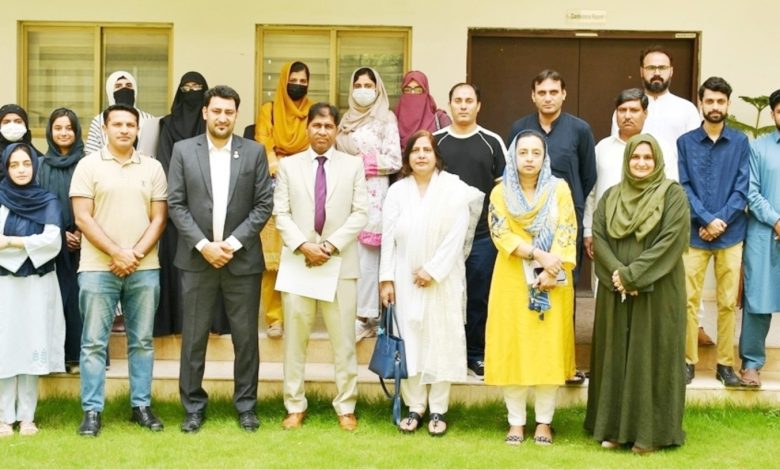
Arid University Hosts High-Level Policy Dialogue on Climate Justice and Nature-Based Solutions
RAWALPINDI – Pir Mehr Ali Shah Arid Agriculture University Rawalpindi (PMAS-AAUR), in collaboration with the Climate Hub Forum (CHF), hosted a High-Level Policy Dialogue on “Climate Justice & Nature-Based Solutions: From Local Roots to Global Impact.” The dialogue brought together global legal, academic, and policy leaders in a hybrid format to assess climate justice in light of the International Court of Justice’s advisory opinion affirming states’ binding legal obligations to prevent environmental harm and protect future generations.
Opening the session, Ms. Erum Khan, Founder of CHF and UN NGL Fellow, emphasized the urgent need for equitable climate finance. She warned against funds remaining tied up in pledges rather than reaching affected communities, declaring, “Loss & Damage funds must reach those who suffer – not sit in pledges. Climate finance must be debt-free, fair, and accessible.” She also announced the creation of a Climate Justice & Regenerative Systems Commission to advance the outcomes of the dialogue into COP30 and beyond.
Prof. Dr. Rahmatullah Qureshi, Dean of Sciences at PMAS-AAUR, showcased the University’s pioneering work in climate-resilient agriculture, mangrove restoration, and the integration of nature-based solutions into academic curricula. He presented a short video highlighting the Faculty of Sciences’ initiatives, including five international conferences and seminars on climate change, food security, and medicinal plants. He reaffirmed the University’s commitment to bridging scientific research with policy for sustainable development.
International and national experts participating in the dialogue noted that the ICJ’s ruling strengthens the case for binding global climate action. They underscored the importance of nature-based solutions for ecosystem restoration and highlighted the growing role of Global South leadership in shaping climate justice frameworks.
The dialogue concluded with five key outcomes: advancing Global South leadership in Loss & Damage finance, strengthening integration between research and policy through PMAS-AAUR, and creating new youth-driven, institutional, and financing pathways to build long-term climate resilience.


