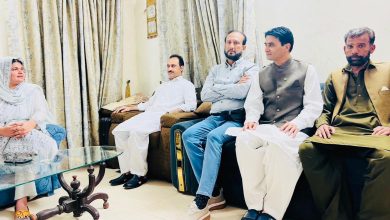
Former caretaker commerce minister and Chairman Economic Policy and Business Development think tank Dr Gohar Ejaz has said Pakistan’s persistent power crisis is not due to lack of installed capacity but stems from deep-rooted governance and management failures in the energy sector.
In a post on X (formerly Twitter), Ejaz noted that despite an installed capacity of 46,605 megawatts (MW), the country continues to face prolonged load-shedding, with industries enduring 2–4 hours of outages while domestic and commercial consumers suffer up to 16 hours of electricity cuts daily.
He highlighted a stark mismatch between capacity and actual supply, revealing that at a peak demand of 20,520 MW, power generation stood at just 13,958 MW, leaving a shortfall of over 4,000 MW.
Ejaz attributed the situation to multiple inefficiencies, including the non-operational status of the Neelum-Jhelum hydropower project, which has reduced the availability of low-cost electricity, and underutilisation of gas-based power plants due to poor fuel allocation.
He further pointed out that solar generation drops to zero at night when demand peaks, while the absence of adequate storage and load management systems exacerbates the crisis. Transmission constraints also prevent available electricity from reaching demand centres, he added.
Criticising the system, Ejaz said consumers are being forced to pay for full installed capacity through their electricity bills, even though reliable supply remains unavailable when most needed.
“The gap between what we have and what we deliver is not an engineering problem, it is a governance and management failure,” he remarked, calling for improved fuel planning, efficient dispatch, better grid coordination, and financial discipline.
Warning that the situation could worsen in peak summer months when demand typically crosses 30,000–33,000 MW, Ejaz questioned the preparedness of authorities to manage the system under increased load.
“The capacity is there. The real question is who is managing it — and how,” he concluded.