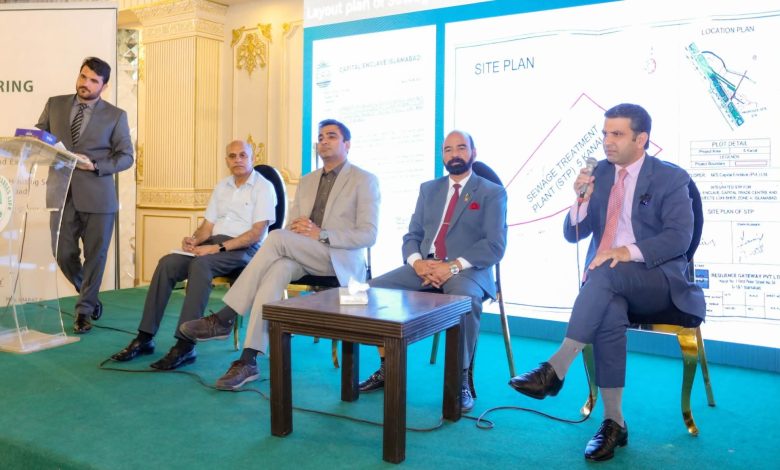
A public hearing on the proposed Imarat Downtown (Imarat Business District – IBD) development in Zone V, Islamabad, brought together environmental authorities, project representatives, and stakeholders to discuss environmental, safety, and sustainability concerns related to the new business district. The session was overseen by the Environmental Protection Agency (EPA) and featured a comprehensive exchange on managing potential impacts from the project.
Project representatives addressed stakeholder questions on a range of environmental topics, including water usage, waste management, biodiversity conservation, noise control, and health, safety, and environmental (HSE) safeguards. They provided assurances that air quality would be protected by maintaining construction machinery, using sprinklers, and scheduling water spraying to suppress dust. Participants in the meeting recommended further measures, like installing dust barriers and ensuring construction materials are properly covered to minimize dust pollution.
On the issue of water supply, the project team clarified that groundwater would not be extracted for the development. Instead, water will be transported to the site using tanker services. For wastewater management, a 5-kanal Sewage Treatment Plant (STP) is being developed in partnership with the Capital Enclave Society to treat all project-generated wastewater.
Demonstrating a commitment to sustainability, the project proponents announced plans to create the largest man-made urban forest in Islamabad. With 300,000 trees already planted, this green initiative is designed to absorb some of the project’s carbon emissions, estimated at over 68,000 metric tons of CO₂-equivalent over the next six years. The initiative aims to reduce emissions by more than half through efficient use of materials, with the urban forest absorbing the remainder.
All feedback and commitments from the hearing are being formally documented and will be submitted to the relevant authorities for consideration during the project’s approval process. Both the EPA and project representatives thanked attendees for their input and emphasized their ongoing commitment to environmentally responsible development.