The World Health Organization (WHO) has launched a major initiative in partnership with the Government of Pakistan to train more than 49,000 health workers for the country’s first mass vaccination campaign against human papillomavirus (HPV), aiming to protect 13 million girls from cervical cancer. The historic effort will target girls aged 9 to 14 years in Punjab, Sindh, Islamabad Capital Territory, and Pakistan-administered Kashmir, marking a significant step forward in public health for Pakistan.
Cervical cancer is currently the third most common cancer among women in Pakistan, affecting a high-risk group of nearly 74 million women over 15 years old. The country sees more than 5,000 new cases of cervical cancer each year, with almost two-thirds of patients not surviving due to late diagnosis and limited access to screening. This mortality rate is among the highest in South Asia. Studies by WHO suggest the true disease burden could be even greater because of low screening rates and the absence of a national cancer registry. Projections show that, without vaccination, cervical cancer rates could triple in the coming decades.
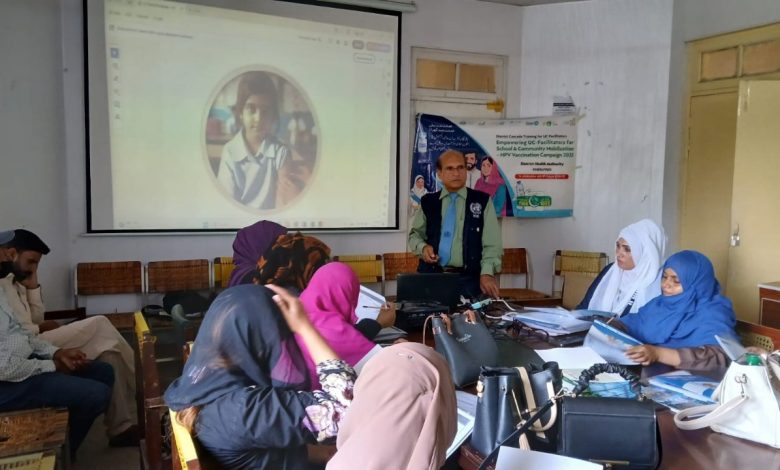
With financial support from GAVI, The Vaccine Alliance, intensive training sessions are being held for health professionals, including vaccinators, doctors, outreach workers, and data entry staff. These sessions focus on planning, technical skills, data management, and community engagement to ensure a successful vaccination campaign.
WHO is also providing technical guidance for planning, data analysis, and capacity building in collaboration with Pakistan’s Federal Directorate of Immunization (FDI) and the Expanded Programme on Immunization. Dr Soofia Yunus, Director General of the FDI, emphasized the campaign as a crucial investment in the health and future of the nation’s daughters, highlighting its role in safeguarding the next generation from cervical cancer.
The initiative is aligned with the World Health Assembly’s global strategy to eliminate cervical cancer. The strategy envisions that by 2030, 90 percent of girls will be vaccinated against HPV by age 15, 70 percent of women will be screened, and 90 percent of those in need will receive appropriate treatment.
Dr Dapeng Luo, WHO Representative in Pakistan, called the campaign a transformative moment for public health in the country and praised the collaboration with the FDI to deliver life-saving vaccines.
The phased approach to introducing the HPV vaccine will eventually expand to Khyber Pakhtunkhwa in 2026 and to Balochistan and Gilgit-Baltistan in 2027, further strengthening Pakistan’s national immunization program. WHO acknowledged the ongoing commitment of Pakistan’s Ministry of Health and its partners in their efforts to protect girls from cervical cancer and ensure a healthier future for all.