The Day the Sky Fell: A Catastrophe Beyond Comprehension
By Syeda Safina Malik
Cloudburst: Two Districts Ravaged in Just Fifteen Minutes
Terror on the Mountain: Clouds Burst, Water Descended as Death
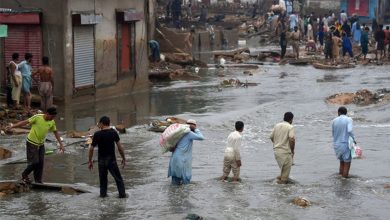
Nature unleashed its fury on the scenic valleys of Swat and Buner in Khyber Pakhtunkhwa, reducing the peaceful lands into a spectacle of horror. These valleys, often celebrated for their lush hills, winding rivers, and breathtaking beauty, turned overnight into a nightmare.
It was an ordinary day. The sky was laden with heavy clouds, the air thick with humidity. Men were at work in the fields and markets, while women tended to children and homes. No one suspected that the looming clouds were not harbingers of rain, but messengers of death.
Suddenly, a thunderous roar echoed across the region. It was not an explosion from the earth, but an ominous crack in the heavens. Within seconds, a catastrophic cloudburst struck Mount Elum. The skies tore open, and torrents of water cascaded down the mountain, forming a monstrous deluge that swept through villages, fields, and homes in its path.
Path of Destruction: Swat and Buner
Initial surveys reveal that about 20 percent of the floodwaters surged toward Mingora, flooding streams and shocking residents who saw rivers rise without a single drop of visible rainfall. Panic spread as drainage channels overflowed, and people rushed to higher ground, unable to understand the sudden surge.
But the deadliest blow came when over 80 percent of the torrent hurled itself toward Pir Baba in District Buner. The flood was not just water; it was a wall of debris, rocks, and uprooted trees that bulldozed everything in its way—villages of Bashonai, Daggar, and even extending into Torghar.
“We had barely fifteen minutes,” recalled one eyewitness, his voice trembling.
“The water came so fast—there was no time to grab the children or help the elderly. Whoever stood in its way was swept away.”
Some residents tried to flee uphill, while others attempted to rescue livestock, but the speed of the torrent left little chance. Those who lived did so by sheer luck—just a few meters’ difference from the torrent’s path was the line between life and death.
A Torrent Faster Than Life
This was no ordinary flood. Estimates suggest the waters covered 100 kilometers in only 15 minutes, averaging a kilometer every nine seconds.
To put that in perspective: in nine seconds, a person can barely catch a breath, make a decision, or take a step. Yet death was racing a kilometer ahead, unstoppable, unyielding.
Neither the mountain’s slope, nor its dense forests, nor the foundations of sturdy homes stood a chance. Strong houses crumbled like sandcastles, and fields were shredded into wastelands. Eyewitnesses describe the sound of rushing water mixed with the cracking of trees, the collapse of roofs, and the screams of those caught in the torrent—a soundtrack of terror etched forever into memory.
Villages Erased from the Map
By evening, the devastation was beyond imagination.
• Pir Baba: 80% of the village obliterated, leaving only fragments of houses and broken foundations.
• Bashonai: Half the homes reduced to rubble, fields buried under layers of mud and rock.
• Daggar: Large parts of the town swept away, with schools, shops, and mosques left unrecognizable.
Families clawed through the mud with their bare hands, searching for loved ones. Children’s toys, family photos, and livestock carcasses lay scattered amid broken bricks and timber.
The ferocity of the flood was evident in a chilling discovery: two women’s bodies were recovered near the Indus River, nearly 100 kilometers from Pir Baba, carried that far by the raging waters.
Human Tragedy: Women and Children Worst Affected
The disaster struck homes hardest. Most young men, working in the fields or outside the villages, escaped. But women, children, and the elderly bore the brunt of the devastation.
“Our village has men,” said one grief-stricken survivor, “but hardly any women or children left. Society itself has been torn apart.”
Some households were reduced to a single survivor. In others, entire families disappeared, leaving no one behind to mourn them. A father wept as he recounted finding his son’s schoolbag in the mud, but not his son. A child clung to the photograph of his mother, retrieved from the rubble of their home.
Behind every number lies a broken family, a torn community, and dreams washed away in minutes.
The Numbers: 222 Dead, Hundreds Still Missing
So far, 222 bodies have been recovered in Buner, but officials warn this is far from the final count. Hundreds remain missing, and with roads destroyed, rescue operations are painfully slow. Helicopters and boats have been deployed, but many villages are still inaccessible.
Entire families have vanished. In some places, parents’ bodies have been found but not the children; elsewhere, children have surfaced but their parents remain missing. The lists of the missing grow longer each day, and with each update, despair deepens.
The Struggle of Rescue and Relief
Rescue workers face nearly impossible challenges. Roads have been washed away, bridges destroyed, and communications cut off. Survivors are stranded without food, clean water, or medical supplies.
Emergency camps have been set up, but overcrowding and lack of resources worsen the suffering. Volunteers dig with shovels, while local men use their bare hands to pull bodies from the rubble. Doctors warn of the risk of waterborne diseases spreading among the displaced, adding another layer to the tragedy.
For many survivors, the trauma is psychological as much as physical. The constant sound of rushing water now triggers panic. Children wake screaming in the night, haunted by memories of drowning siblings or mothers torn from their arms.
Why Cloudbursts Happen
Meteorologists explain that a cloudburst occurs when heavy, moisture-laden clouds rapidly release their contents over a concentrated area, often in mountainous regions. The narrow valleys of Swat and Buner, surrounded by steep terrain, magnify the effect.
Pakistan, increasingly vulnerable to climate change, has seen a rise in such unpredictable and extreme weather events. Scientists warn that deforestation and unregulated construction in mountain regions exacerbate the destruction by stripping away natural barriers that could slow floodwaters.
“This disaster is not just natural—it is also man-made,” noted one environmental expert. “We have disturbed the balance of these mountains, and now we are paying the price.”
A Land of Silence
Today, villages in Buner and Swat stand like ghost towns. Where once there were children playing in fields, women drawing water, and men tending crops, now there is only silence. Uprooted trees lie scattered like fallen soldiers, roofs dangle precariously from half-collapsed walls, and cattle lie buried in mud.
Survivors wander aimlessly among the ruins, staring blankly at what used to be homes. In the evenings, small groups gather around fires, not to cook but to mourn. The air smells of damp earth, loss, and grief.
Apocalypse in Minutes
This disaster is already being described as one of the worst human tragedies in Pakistan’s history. The Elum cloudburst did not just sweep away land and homes—it carried away generations of love, labor, and memory.
For those left behind, survival is overshadowed by an unanswerable question: Why us?
The silence of the valleys holds no answers. Instead, it whispers a question that hangs over all of humanity:
Will we ever be safe from the wrath of nature—or are we only ever moments away from the next catastrophe?
About the Author
Syeda Safeena Malik is a freelance journalist, vlogger, and blogger with a Master’s degree in English. She writes on social issues, human tragedies, and cultural narratives, aiming to give voice to stories that often go unheard.