Islamabad, 27 October 2025 — The Ministry of Information Technology and Telecommunication partnered with Meta today to accelerate digital transformation across Pakistan, unveiling an Urdu-capable version of Meta AI called ALIF and announcing complementary AI literacy and public sector programs.
Shaza Fatima Khawaja, Federal Minister for Information Technology and Telecommunication, said the work aligns with the Prime Minister’s Digital Nation Vision and Pakistan’s National AI Policy, emphasizing that ALIF and the broader partnership aim to make technology more inclusive so citizens can access information and services in their own language.
The introduction of ALIF means Meta AI Urdu support is now available to users across Pakistan, enabling conversations, content discovery, and everyday problem solving in Urdu. By adding Urdu support, Meta AI Urdu removes a key language barrier and widens access for people who prefer to read, write or interact in the national language.
Alongside ALIF, Meta and the Ministry released a localized edition of the guide Transforming Public Sector Innovation in Asia Pacific with Llama, developed with Deloitte. The localized guide offers practical steps for government bodies to adopt open-source models like Llama to streamline operations, improve public service delivery, and reinforce data sovereignty considerations tailored to Pakistan’s context.
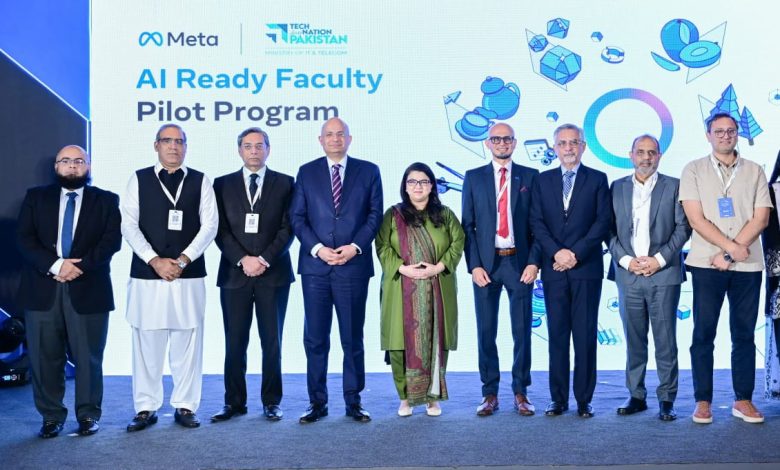
Building on academic collaboration, the Ministry, Meta, the Higher Education Commission, the National Computing and Emerging Sciences Accreditation Council and Atomcamp launched an AI Literacy Programme to upskill 350 non-Computer Science faculty members across Pakistani universities. The programme aims to equip educators with core AI competencies so knowledge transfers to thousands of students across disciplines.
Sarim Aziz, Director of Public Policy South and Central Asia at Meta, reiterated the company’s commitment to Pakistan’s AI-driven growth and said the launch of Meta AI Urdu and these initiatives will help the public sector and academia harness AI for inclusive digital transformation. Fizza Amjad, CEO of Atomcamp, noted that training non-technical faculty creates a ripple effect that strengthens links between universities and industry and prepares a broader range of students for the future of work.
Officials said the combined efforts — localized tools, an open-source guide for public sector innovation, and targeted AI literacy training — are designed to accelerate government digital transformation while ensuring that Pakistanis can engage with emerging AI technology in Urdu and benefit from wider participation in the digital economy.