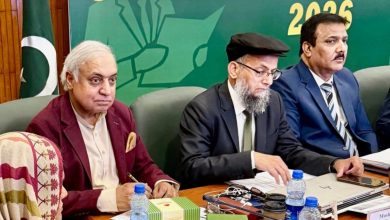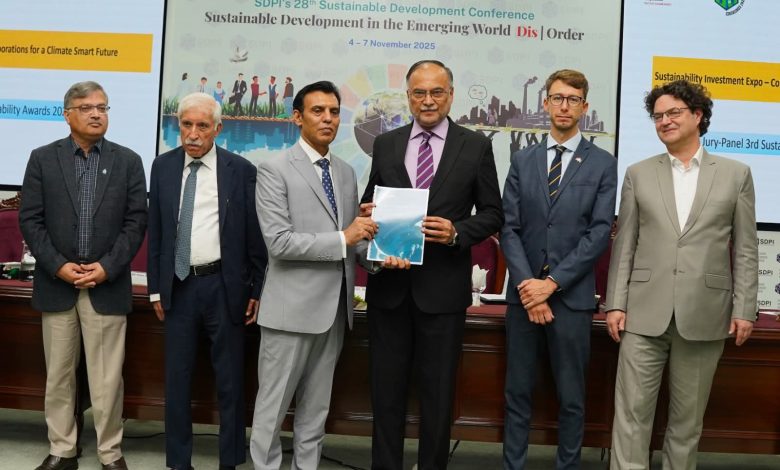
Professor Ahsan Iqbal called for a new global agreement at the 28th Sustainable Development Conference in Islamabad, saying the world must embrace a framework built on fair economic growth, environmental justice and cooperative action rather than confrontation. He stressed that a credible global agreement is essential to deliver real benefits for the Global South.
Referencing the United Nations 2024 report on the Sustainable Development Goals, Professor Iqbal warned that the international outlook is worrying, with only 17 percent of targets currently on track and more than half experiencing delays. He highlighted that a large share of developing countries’ budgets is being diverted to debt servicing, undermining spending on education and health and eroding gains toward the SDGs.
Professor Iqbal cautioned that without a fair international financial framework the SDGs risk becoming a mirage for the southern world. He urged policymakers to negotiate a sustainable and equitable global agreement that addresses debt relief, access to finance, and mechanisms to protect social spending in vulnerable economies.
The government has prepared a comprehensive national framework under Udaan Pakistan to achieve a trillion-dollar economy by 2035. That vision rests on five interlinked pillars: exports-led growth, e-Pakistan digital transformation, environmental sustainability, modernization of energy and infrastructure, and equity with an empowered future for all citizens.
As part of this agenda, authorities are committed to enrolling more than 25 million children in schools, expanding primary healthcare systems and empowering women to help reverse trends of uncontrolled population growth. These domestic measures, Professor Iqbal said, must be reinforced by an enabling international environment embodied in a robust global agreement.
He urged developing countries to strengthen cooperation on exchanging natural disaster data, promoting clean energy trade, pooling resources for green infrastructure investment and supporting youth-led innovation. In an era of heightened geopolitical tensions, he argued, collective action and solidarity remain the most effective path to sustainable development and climate justice.