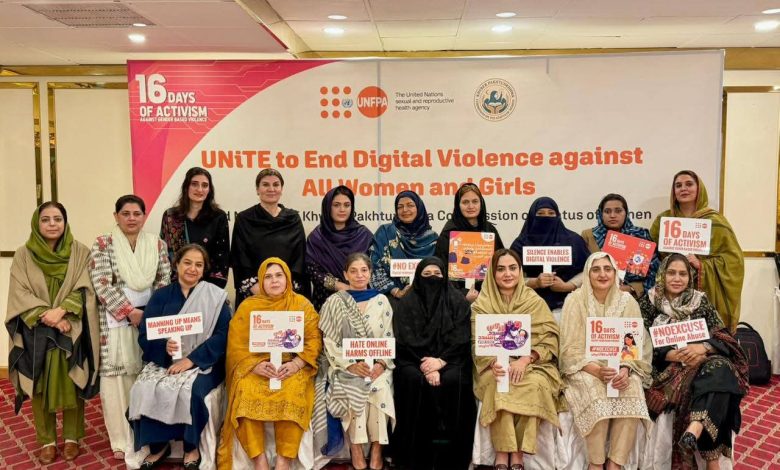
The 71st board meeting of the Khyber Pakhtunkhwa Commission on the Status of Women (KPCSW) was held in Islamabad in collaboration with UNFPA under the provincial women empowerment policy. The session, chaired by Dr Samira Shams, brought together commission members including Suraiya Bibi, Deputy Speaker of the KP Assembly, MPA Rehana Ismail, Taiba Batool, Muslim Taj, Humaira Nawaz, Shukriya Syed, Dr Minhas Majid, Amna Pervez, Komal Younus, Shabina Ayaz, Tahira Kaleem, Secretary Shazia Atta and Syeda Nadrat from the Social Welfare Department, along with UNFPA and other women commission officials.
Dr Samira Shams highlighted how digital harassment, blackmail and hate messaging are major obstacles to women’s online participation and stressed that creating a safe, empowered and equal digital environment is a shared responsibility. She emphasized that identifying digital threats at this forum must be followed by concrete policy-level measures so that every woman and girl can raise her voice online without fear.
Participants agreed to accelerate development of new proposals and recommendations to remove digital barriers, to strengthen the policy framework for women’s protection, rights and digital safety, and to expand women’s digital empowerment programmes through UNFPA support. The commission also resolved to clarify its 2025 priorities and ensure effective implementation across provincial institutions, with digital safety central to those efforts.
To drive implementation, the board approved formation of several key committees including an executive committee, a technical committee for the women empowerment policy, a child marriage legislation committee and a technical committee on women’s inheritance and property rights. These bodies will lead work on legislative reforms, policy enforcement and institutional strengthening to protect women’s rights and advance digital safety in Khyber Pakhtunkhwa.
Officials noted that coordination with UNFPA and provincial departments will be essential to scale programmes and translate recommendations into on-the-ground action, and they underscored the need for timely monitoring and resource allocation to meet the commission’s 2025 objectives for women’s empowerment and digital safety.