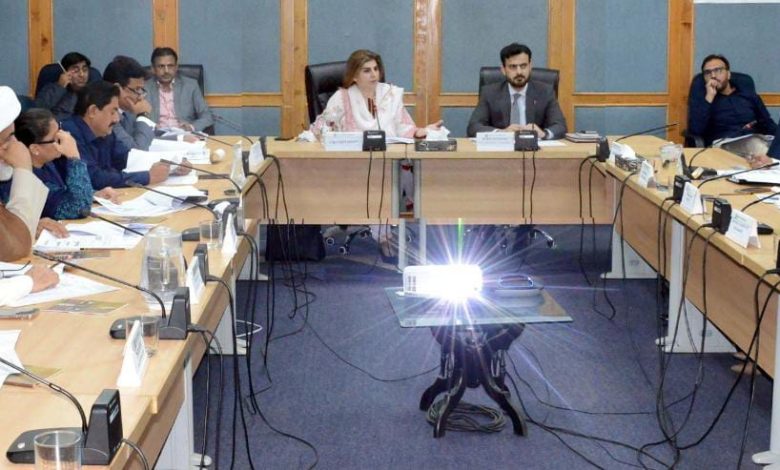
The Senate Functional Committee on Human Rights has called for enhanced legislative and institutional measures to strengthen protections for children, persons with disabilities, and gender equality in Pakistan. In a recent meeting chaired by Senator Samina Mumtaz Zehri, committee members reviewed a series of amendments and initiatives designed to improve legal clarity, data collection, cybercrime capacity, and the overall implementation of human rights commitments.
The Committee examined the National Commission on the Rights of the Child (Amendment) Bill, 2023 and the Islamabad Capital Territory (ICT) Rights of Persons with Disability Bill, 2024, both tabled by Senator Dr. Zarqa Suharwardy Taimur. Key agreed-upon amendments to the Disability Bill include mandatory five-yearly surveys of educational institutions, provision of specialized books and assistive devices, scholarship schemes, and the promotion of inclusive education for children with disabilities. In addition, the Committee addressed the need to incorporate internationally recognized definitions for “mild” and “moderate” disabilities to ensure greater legal clarity.
While the Ministry of Human Rights initially raised concerns about overlapping functions with existing frameworks, consensus was ultimately reached to refine bill language and enhance their enforceability. The Committee underscored the importance of government-led awareness campaigns, regulatory oversight, and robust data-gathering mechanisms. Islamabad has already launched a dedicated application to support parents and collect data on children with disabilities, piloting approaches that may later be replicated in other provinces. Notably, Punjab and Sindh have enacted their own disability rights legislation, while Khyber Pakhtunkhwa’s law remains under development.
Addressing child online protection, the Committee was briefed on new measures to boost the operational capacity of the National Cyber Crime Investigation Agency (NCCIA). Recommendations included expanding cybercrime units nationwide, enabling remote complaint registration, recruiting trained personnel, and improving inter-agency collaboration. Given only 30 cybercrime-related convictions to date, members expressed concern over slow legal proceedings, victims’ reluctance to pursue cases, and gaps in victim support services. The Committee called for stronger offender databases, background check systems, and reinforced helplines, along with psychological support for affected children.
The Committee also discussed the ongoing challenges in advancing gender equality and increasing women’s participation. The Secretary of Human Rights attributed Pakistan’s low ranking in the World Economic Forum’s Gender Gap Report to outdated statistics, underreporting, entrenched systemic barriers, and insufficient coordination between key institutions such as the Higher Education Commission and UNESCO. Members stressed the need for regular, transparent national reporting, heightened accountability for implementation partners, and penalties for negligence.
Senator Samina Mumtaz Zehri highlighted persistent delays in the conviction process, pointings to inefficiencies in the judicial system and prolonged prosecutorial procedures. She emphasized that delayed justice undermines victims’ rights and called for accelerated, coordinated action among stakeholders to ensure swift legal recourse. Further, she criticized the government’s failure to provide accurate data at international forums, notably during United Nations reviews in Geneva, cautioning that inaccurate reporting on sensitive issues like blasphemy could damage Pakistan’s international standing. The committee urged the Ministry of Human Rights to prioritize factual and transparent communication in all international engagements.
The meeting was attended by Senators Khalil Tahir, Poonjo Bheel, Qurat-Ul-Ain Marri, Raja Nasir Abbas, Dost Muhammad Khan, Jam Saifullah Khan, Dr. Zarqa Suharwardy Taimur (participating online), as well as the Secretary of the Ministry of Human Rights and senior officials from relevant departments.