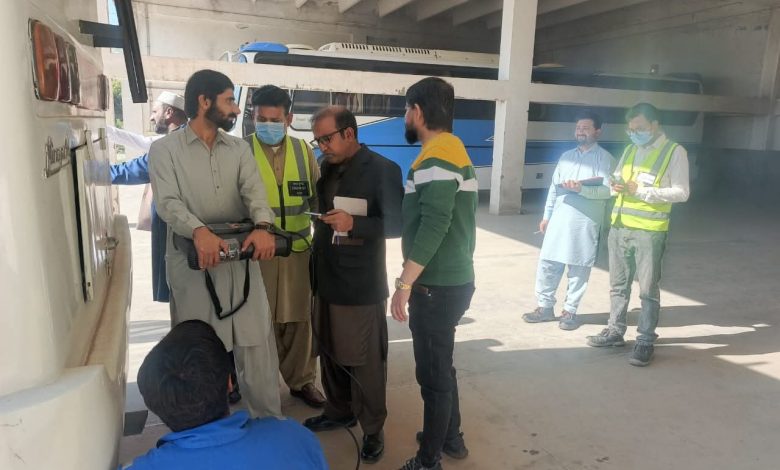
Islamabad, November 7, 2025 — The Pakistan Environmental Protection Agency carried out a targeted inspection of heavy-duty diesel vehicles at the NUST Main Campus in H-12 to enforce the National Environmental Quality Standards for motor vehicle exhaust and noise. The activity was led by Mr. Binyameen, Deputy Director (R&I), under the guidance of the Director General of Pak-EPA.
Inspectors focused on buses, coaches and bowser tankers operating on campus routes and adjacent roads. Most vehicles met the NEQS smoke opacity limits, but a number of units were identified as requiring maintenance and tuning to bring tailpipe readings fully into compliance. The team highlighted that timely servicing is essential to control vehicle emissions and protect local air quality.
It was noted that NUST has outsourced part of its transport fleet to private vendors. Pak-EPA officials said these outsourced vehicles will be inspected in coordination with NUST management at a later date to ensure all campus services meet regulatory standards.
This monitoring drive is part of Pak-EPA’s continuing efforts to reduce vehicular emissions, curb smog and improve Islamabad’s air quality through collaboration with public and private stakeholders. Strengthened enforcement of NEQS and regular checks on heavy-duty vehicles remain central to lowering vehicle emissions across the capital region.