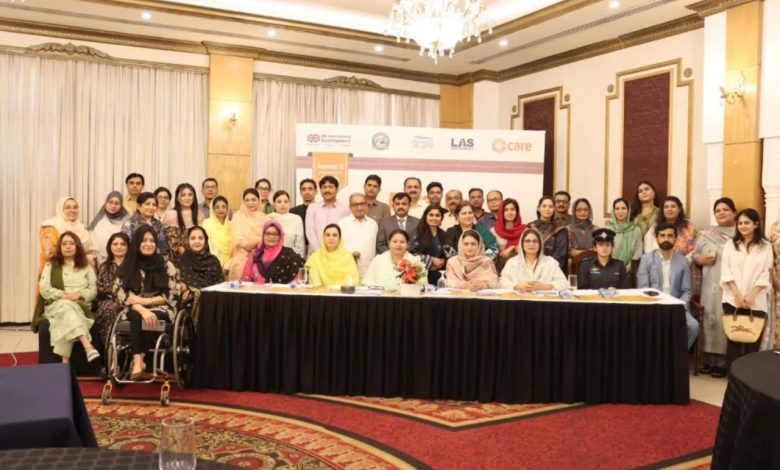
The Sindh provincial government and civil society have renewed efforts to strengthen the province’s Domestic Violence response after a provincial policy dialogue highlighted persistent implementation gaps. Organized by the Sindh Commission on the Status of Women in partnership with the Legal Aid Society under the Aawaz II programme, the meeting brought together policymakers, parliamentarians, government officials, civil society actors, and representatives of marginalized communities to review progress since the 2013 law was passed.
Participants noted that while the Domestic Violence framework on paper is comprehensive, survivors continue to face barriers including underreporting, stigma, fear of reprisals, weak referral systems, and limited survivor-centered services. Evidence from Aawaz II engagements showed particularly low legal awareness in rural areas and poor institutional coordination that undermines effective protection and access to justice.
A policy paper titled Implementing the Sindh Domestic Violence Prevention and Protection Act outlined urgent reforms ranging from legislative amendments to stronger institutional coordination, improved FIR procedures, better referral systems, capacity-building for justice actors, and increased investment in protection services. Advocate Maliha Zia of the Legal Aid Society presented a Domestic Violence Protection Blueprint calling for more functional One-Stop Protection Centres, improved policing systems, operational district protection mechanisms, and coordinated service delivery across agencies.
Rozina Aman Brohi, chairperson of the Sindh Commission on the Status of Women, said the law has not been implemented in its true spirit over the past 13 years and urged expansion of protection centres, enhancement of women police stations, higher budgets for awareness campaigns, and focused empowerment of rural women. The dialogue emphasized that strengthening the Domestic Violence architecture requires both institutional reforms and community outreach.
Provincial Minister Shaheen Sher Ali highlighted that legal awareness is failing to reach rural and marginalized communities, in part because key materials are not available in Urdu and Sindhi. He recommended door-to-door awareness led by Lady Health Workers and stressed that empowering girls remains essential to preventing domestic abuse. The proposed measures seek to make the Domestic Violence law more accessible and survivor-centred across Sindh.
The dialogue concluded with a renewed commitment from government and civil society to improve coordination, accountability, and survivor-focused services. Stakeholders agreed to prioritize capacity-building, stronger referral protocols, and expanded protection infrastructure to ensure the Domestic Violence law translates from statute to meaningful protection for survivors across the province.