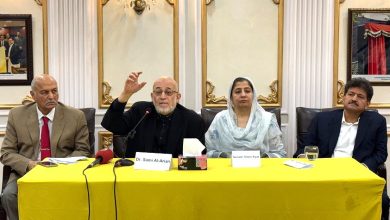
The Sustainable Development Policy Institute convened a high-level debate on fiscal discipline and energy policy where parliamentarians and experts warned that escalating regional tensions, especially the Middle East crisis and disruptions around the Strait of Hormuz, have exposed Pakistan to external energy shocks and underscored the urgency of structural reforms to protect energy security.
Ali Pervaiz Malik, Federal Minister for Petroleum, highlighted that Pakistan maintained fuel supplies throughout recent global volatility without adding to circular debt and urged a balanced, practical energy transition that pairs conventional fuels with renewables. He noted collaboration with Turkish Petroleum for local exploration and estimated that large-scale investment will be needed to build renewable energy infrastructure and strategic reserves.
Bilal Azhar Kayani, Minister of State for Finance, said the government prioritizes diversification and indigenization of the supply chain through hydropower and solar, along with refinery upgrades to produce cleaner Euro-5 fuels. He added that electric vehicles will gain traction as market conditions make them viable for consumers, contributing to long-term energy security.
Dr Abid Qaiyum Suleri of SDPI observed that the dialogue came as the federal budget was being prepared under an IMF programme and stressed replacing blanket subsidies with targeted support such as the Benazir Income Support Programme. He urged a rethink of Pakistan’s solar rollout, grid connectivity and overall energy mix to reduce vulnerability to international shocks and to reinforce national energy security.
Lawmakers and analysts warned that Pakistan remains heavily exposed to Gulf supply routes, with nearly 70 percent of oil imports transiting the Strait of Hormuz. Dr Nafeesa Shah called for a new energy paradigm anchored in sovereignty, local resources, renewable deployment and equitable energy federalism, while urging provincial involvement in planning and measures to address energy deprivation in smaller districts.
Industry voices pressed for rapid modernization and clearer governance. Adil Khattak of Attock Refinery called for billions in refinery upgrades and a unified leadership structure for energy ministries. Economic experts including Dr Khaqan Hassan Najeeb and Afia Malik argued for integrated energy planning, a single coordinated regulator, and immediate focus on affordability and storage solutions to make the energy transition socially sustainable.
Speakers also warned that opaque policymaking and reactive pricing undermine trust and worsen inflationary pressures. Dr Sajid Amin Javed noted that panic-driven fuel price decisions and delayed pass-through of global prices have increased market uncertainty, while former ministers and business leaders urged governance reforms, technology-driven oversight and a shift from fuel-intensive road freight to rail to conserve energy and reduce costs.
Parliamentary leadership emphasized that solutions exist but fiscal constraints limit Pakistan’s ability to absorb further shocks. Syed Naveed Qamar called for governance reforms, mobilization of local resources and a clear roadmap in the upcoming budget to strengthen energy security and protect vulnerable households as the country navigates a challenging regional and global landscape.