by: Nadeem Tanoli
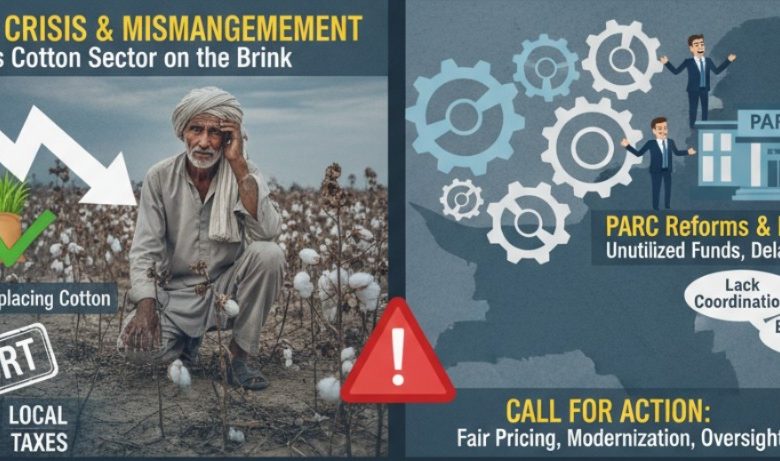
During a Senate Standing Committee on National Food Security and Research session in Islamabad, lawmakers warned that the cotton crisis has pushed traditional growing belts to the edge, with many local producers facing severe exploitation as sugarcane replaces cotton in key districts.
Senator Abid Sher Ali told the committee that Pakistan, once a major cotton exporter, now relies on imports after years of flawed policy choices and rising input costs. He said the shift toward sugarcane cultivation and weak zoning enforcement have further undermined local cotton production.
Committee members aired allegations that powerful intermediaries profit at farmers’ expense, noting that imported cotton often enters with little or no tax while domestic producers contend with levies that erode their margins. The panel stressed the need for a robust coordination mechanism between federal and provincial governments to restore viable cotton farming and protect rural livelihoods amid the wider cotton crisis.
Federal Minister Rana Tanveer Hussain acknowledged the seriousness of the situation but attributed low yields to poor zoning implementation, the expansion of sugarcane, and climate-related pressures. He rejected claims of a fertilizer shortage, saying supplies and prices remain competitive by international standards. The minister also outlined ongoing reforms at the Pakistan Agricultural Research Council to modernize research, seed technology and mechanization support for growers.
Committee members expressed concern about insufficient wheat and cotton yields, lack of provincial cooperation and stalled infrastructure projects. Lawmakers pointed out that billions earmarked for agricultural laboratories in Khuzdar and Turbat remain unutilized, reflecting wider delays that hamper research and extension work. Senator Shahadat Awan highlighted the growing gap between production costs and farm incomes, warning that low returns are discouraging cultivation and limiting Pakistan’s agricultural potential.
The meeting reviewed proposed amendments to seed regulations from 2016 and 2021 aimed at improving licensing procedures and regulatory clarity for new seed businesses. Requests from the Pakistan Cotton Ginners Association to consider establishing sugar mills in cotton-producing areas were also discussed as officials weigh economic and cropping impacts.
Senator Syed Masroor Ahsan, committee chairman, said strengthening agricultural extension services and ensuring effective federal-provincial coordination are critical to reversing declining productivity in wheat and cotton. The session concluded with calls for stricter oversight, fair pricing for local cotton and accelerated modernization of research institutions so that PARC can become a centre of excellence for seed development, technology transfer and enhanced farmer support to help Pakistan reclaim its role in global cotton markets.