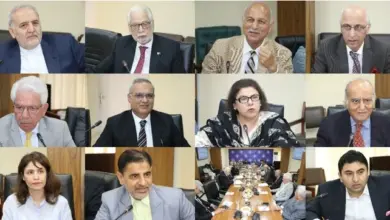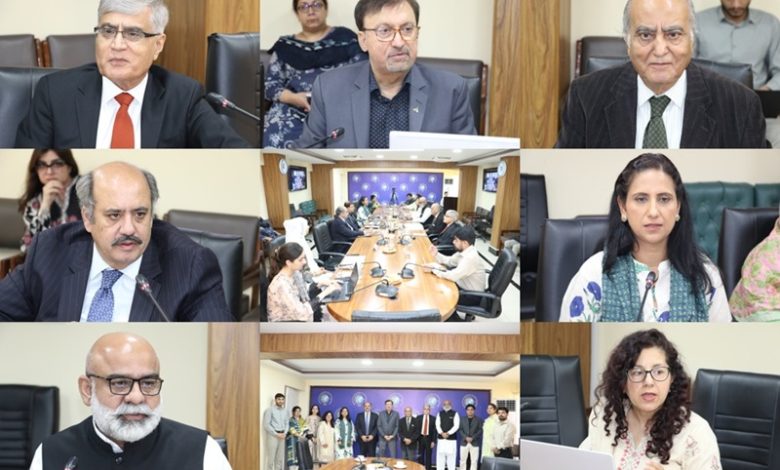
The Arms Control and Disarmament Centre at the Institute of Strategic Studies Islamabad convened an in-house meeting to mark Youm-e-Takbeer under the theme Strategic Stability, Emerging Threats and Role of Diplomacy, bringing together leading academics, retired military officials and policy experts to examine how Pakistan can sustain credible deterrence amid technological change.
Ambassador Khalid Mahmood, Chairman of the ISSI Board of Governors, opened the session by underlining that Pakistan’s nuclear capability emerged from pressing security imperatives and the need to restore strategic balance in South Asia. He noted that Pakistan adopted the nuclear path reluctantly after India’s tests created existential concerns, and that Pakistan’s deterrent has since held despite repeated tests of resolve.
Malik Qasim Mustafa, Director of ACDC, recalled May 28 as a pivotal date in Pakistan’s history and warned that deterrence faces new pressures from emerging and disruptive technologies and regional conflicts. He urged modernization of nuclear posture so deterrence remains credible, effective and responsive to evolving threats.
Dr. Rizwana Abbasi highlighted how strategic stability in South Asia is becoming more fragile as India’s military posture evolves. Pointing to the Cold Start-era focus on offensive war-fighting capabilities, she argued that precision weapons, drones, advanced surveillance, artificial intelligence and automated decision aids are complicating crisis dynamics, while unilateral actions on Kashmir and disputes over the Indus Waters Treaty have further strained regional trust.
Air Commodore (Retd) Khalid Banuri warned that the character of war is rapidly shifting with the rise of AI, hypersonic weapons and space systems, a convergence he described as a dangerous triangle of escalation. He stressed the importance of keeping humans in the decision loop, extending arms control frameworks to emerging domains and investing in dependable crisis communications. Maj. Gen. Ausaf Ali (Retd.) added that nuclear capability is only one dimension of national power and that escalation may now involve cyber operations, space and electromagnetic domains, quantum technologies and hypersonics.
Professor Dr. Zafar Nawaz Jaspal emphasized that sustained diplomatic engagement is essential to preserve strategic stability in the region. He pointed to Pakistan’s diplomatic efforts in regional crisis management and cautioned that the bilateral deadlock with India has prevented confidence building and arms control measures from taking root. He also noted that emerging alignments such as I2U2 and QUAD and changes in India’s doctrine towards escalation dominance must inform Pakistan’s strategic calculations.
The discussion concluded with an interactive question and answer session and a group photograph, underscoring a shared view among participants that Strategic Stability will require a combined approach of credible deterrence, diplomatic outreach and careful management of emerging technologies.