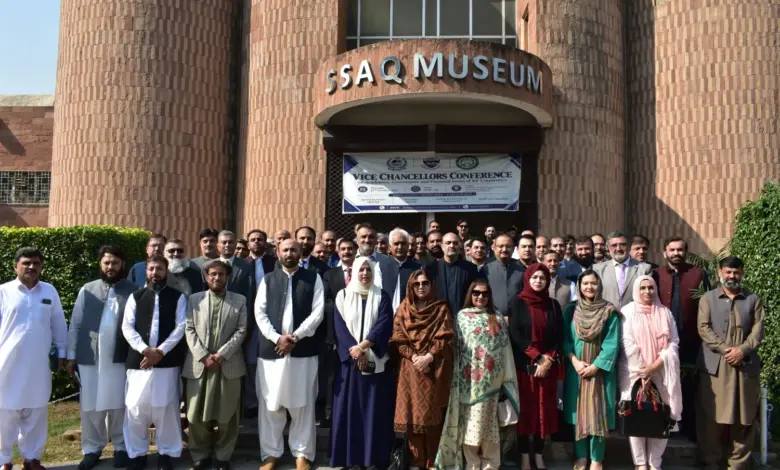
PESHAWAR: A conference of vice chancellors was held at the University of Peshawar on Thursday to review academic, administrative and financial challenges confronting public sector universities in Khyber Pakhtunkhwa and to frame practical proposals for their financial sustainability.
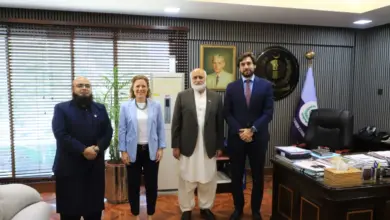
Dr Aamer Abdullah, Member of the Advisory Council for Education, Khyber Pakhtunkhwa, attended the conference as chief guest. Secretary Higher Education, Archives and Libraries Abidullah Kakakhel, Special Secretary Fazal Hussain, Director Quality Assurance, Higher Education, Dr Imranullah Marwat, vice chancellors of public sector universities from across the province and other senior administrative officials were also present.
The conference was convened to identify major issues faced by public sector universities and develop workable recommendations through collective consultation.
Addressing the participants, Dr Aamer Abdullah said education and learning were the core objectives of university life. He said students must be provided an environment suited to their academic needs, adding that monitoring student activities was necessary to ensure their time on campus was used for positive and constructive purposes.
He said the government had adopted a zero-tolerance policy against all forms of negative activities on university campuses and university administrations should also take a firm position without showing leniency. He stressed that campuses should be kept free from all undesirable activities.
Dr Aamer Abdullah also called upon universities to give special attention to financial governance. Expressing concern over the current state of internal audit systems in universities, he said these systems needed improvement to ensure effective financial oversight and accountability.
He directed university administrations to provide quality residential facilities in student hostels and further improve existing accommodation and related amenities.
The chief guest said university campuses must be made drug-free. He directed administrations to immediately contact relevant authorities whenever support from the district administration or police was required so that timely and effective assistance could be ensured.
Referring to the working groups formed for the conference, Dr Aamer Abdullah urged the participating experts to prepare practical recommendations capable of being implemented to address the challenges faced by universities.
Speaking on the historical development of higher education and university systems, he said the region had remained a centre of intellectual and academic activity since ancient times. He noted that during the Gupta and Maurya periods, learning and scholarship flourished, while institutions such as Nalanda and Taxila served as renowned centres of higher learning where scholarly discussions and intellectual debates were encouraged.
He also referred to the role of institutions such as the University of al-Qarawiyyin in advancing knowledge and research in Islamic history. He highlighted the importance of translation movements and centres of learning and research linked with the Hijaz and Bayt al-Hikmah in promoting intellectual development and the spread of knowledge.
Dr Aamer Abdullah said the medieval period marked another stage in the evolution of higher education, during which the concept of academic degrees gained prominence. He added that the British colonial period introduced an education system and institutional model whose influence was still visible in teaching and learning practices in the country.
Discussing the modern phase of university development, he said strong financial systems had enabled leading universities around the world to achieve stability and distinction. Such institutions, he said, adopted different strategies to strengthen financial resources and reduce dependence on external funding, which allowed them to invest more effectively in research, academic development and competitiveness.
He observed that the present era of higher education was increasingly shaped by endowment funds, research and academic competition. He urged university authorities to adjust to this modern phase by taking effective steps for financial sustainability, promotion of research and improvement of academic standards.
Dr Aamer Abdullah described the conference as an important opportunity to deliberate on fundamental challenges and prepare actionable recommendations. He said the services of a consultancy firm could also have been obtained for the purpose, but the joint effort of experienced university experts through consultation could become a significant milestone in improving institutional performance, academic activities and governance in public sector universities.
Vice Chancellor of the University of Peshawar Professor Dr Johar Ali, Abidullah Kakakhel and other senior officials of the Higher Education Department also addressed the conference.
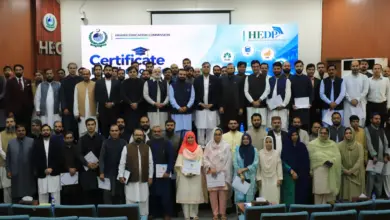
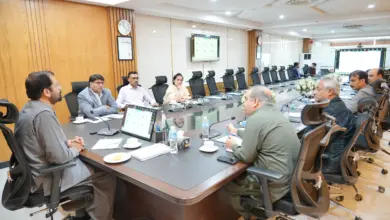
The working groups discussed a range of issues, including academic and administrative challenges, governance reforms, implementation of anti-harassment policies, measures to eliminate drugs from campuses, financial constraints, establishment and strengthening of endowment funds and activation of alumni associations. The groups also presented their recommendations and proposals for dealing with these matters.