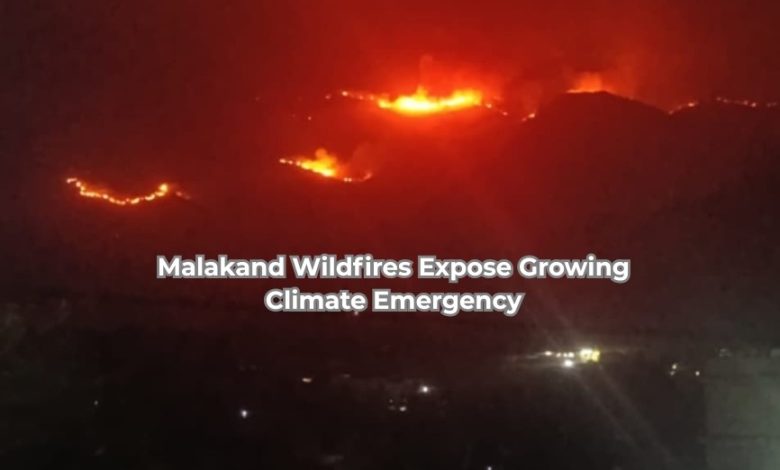
Malakand: For the past five days, a relentless wildfire has been consuming the towering, forested mountains of Malakand, yet no formal response has been initiated by any authority or institution. With no official statements, investigations, or coordinated fire control efforts in place, local residents have been left to combat the flames on their own—without success. The rapidly spreading fire in these remote regions is far beyond human control without the deployment of modern firefighting technology.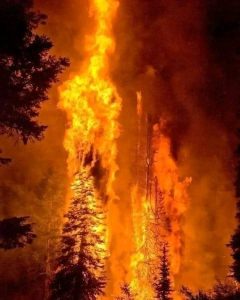
Malakand, a region known not only for its historical and cultural significance but also for its critical environmental role, is now facing a climate catastrophe. These mountains are home to diverse wildlife, now trapped in what has effectively become a blazing inferno. The area is ecologically crucial to the entire Khyber Pakhtunkhwa province and beyond, influencing regional weather patterns, agriculture, and tourism. Known historically for its rainfall and snowfall, Malakand’s climate has long benefited vast parts of Pakistan.
The frequency of such wildfires in Malakand has increased over recent years, signaling a disturbing trend tied to broader environmental degradation and changing climate conditions. This is not an isolated incident; rather, it is part of a larger and ongoing ecological crisis. The destruction of ancient trees and forest ecosystems—whether through natural causes, human error, or deliberate negligence—poses a grave threat to biodiversity and regional environmental stability.
The situation calls for urgent climate-focused policy reform and investment in sustainable forest management. Without proactive, science-based interventions, the cycle of destruction will persist, accelerating the loss of invaluable natural resources and exposing the region to even more severe climate-related disasters in the future.