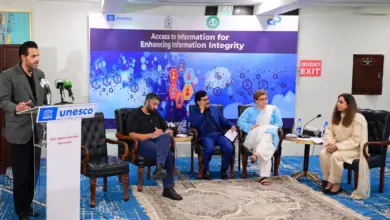
Islamabad: A national dialogue held in Islamabad emphasized the urgent need for Pakistan to develop a comprehensive framework on Media and Information Literacy (MIL). The event gathered government representatives, media professionals, academics, and civil society organizations to address increasing challenges posed by misinformation and disinformation. Hosted by UNESCO in partnership with Media Foundation 360, SZABIST University Islamabad, and the University of the Punjab’s Department of Digital Media, the dialogue aimed to inform and strengthen Pakistan’s media literacy policy framework.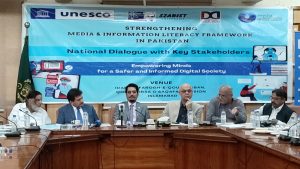
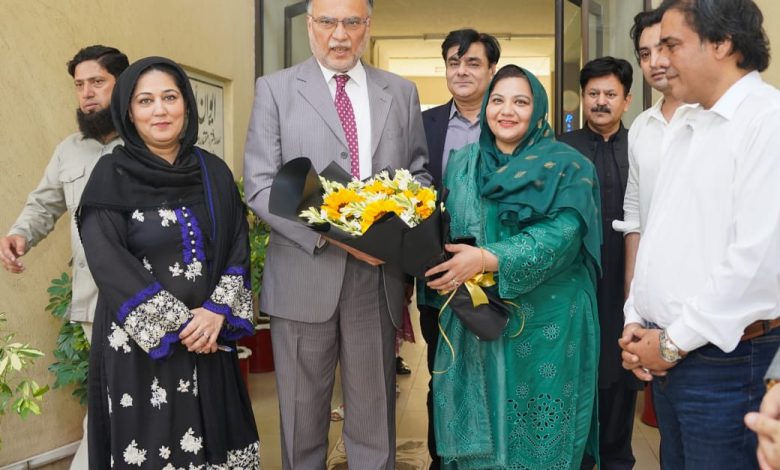
Delivering the keynote address, Pakistan’s Federal Minister for Planning, Development, and Special Initiatives, Prof. Ahsan Iqbal, highlighted the escalating threats of misinformation and disinformation in society today. Calling upon collective action to address these concerns, Minister Iqbal committed to forwarding the MIL framework proposed at the event to the government for further necessary steps.
UNESCO’s National Programme Officer, Hamza Sawati, opened the dialogue by welcoming attendees and recognizing the active collaboration of partner institutions. Stressing the importance of establishing a robust national MIL framework, Sawati reaffirmed UNESCO’s ongoing commitment to supporting critical thinking, responsible digital engagement, and strengthened media literacy, particularly within the rapidly evolving information landscape Pakistan currently faces.
Presenting details of the ongoing project, Dr. Savera Mujib Shami, Research Lead and Chairperson of the Department of Digital Media at the University of the Punjab, provided an in-depth overview of findings gathered through extensive provincial and district-level consultations. She shared key recommendations reflecting diverse local perspectives, which will underpin the development of the MIL framework and policy recommendations.
Delivering remarks at the event, Khusro Pervaiz Khan, Head of SZABIST University’s Islamabad Campus, underscored the crucial role of educational institutions in promoting media literacy and digital responsibility among the youth. Khan assured participants of SZABIST’s continuous support and commitment to fostering a generation of critically engaged and media-literate students.
The dialogue also received international endorsement from Canadian High Commission’s Political Counsellor, Daniel Arsenault. Commending the initiative, Arsenault described the dialogue and the policy development efforts as timely, impactful, and essential for responsibly navigating modern digital challenges.
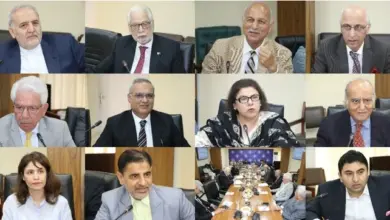
Subsequent discussions featured prominent media professionals including Asma Shirazi, Mohammad Malick, Amir Ilyas Rana, Hamid Mir, Faisal Zahid Malik (CEO of Pakistan Observer), and senior representatives from journalism bodies such as Afzal Butt (President, Pakistan Federal Union of Journalists) and former PFUJ President Nawaz Raza. Additionally, perspectives were shared by senior experts including Zafar Ullah, former Executive Director of the Pakistan Institute for Parliamentary Services (PIPS). These participants described the initiative as an essential and timely effort to combat misinformation and promote responsible media use.
In their interventions, panelists also emphasized that tackling misinformation would require fundamental shifts in society, including improved primary education systems and increased awareness among older generations who may unintentionally propagate falsehoods. Journalists and media professionals, they argued, have a particular responsibility in spearheading national conversations on digital literacy and informed citizenship.
Overall, the event generated highly positive feedback from participants representing academia, media, policymaking circles, and civil society. Attendees praised the dialogue’s inclusive approach and clearly articulated objectives. Insights and recommendations gathered during this event will guide the creation of Pakistan’s comprehensive Media and Information Literacy framework designed to enhance digital literacy, reinforce democratic civic values, and build greater societal resilience against misinformation and disinformation.