FBISE Curriculum Policy Update Clarifies Exam Reforms and Assessment


FBISE Engages Stakeholders in 60th E-Kachehri: Strategic Clarifications on Curriculum Overhaul, Practical Assessments, and Examination Policy Reforms
Nadeem Tanoli
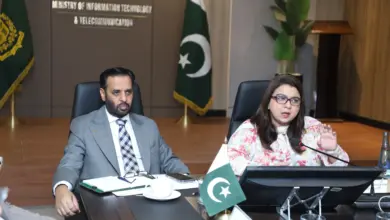
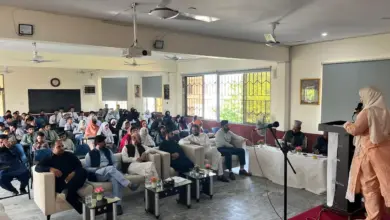
Islamabad: In a significant public-facing session of administrative transparency, the Federal Board of Intermediate and Secondary Education (FBISE) convened its 60th virtual E-Kachehri to address critical academic and procedural concerns raised by students, educators, and institutional stakeholders. The session, led by Director Mirza Ali and Controller of Examinations Aqeel Imran, served as a strategic platform to clarify wide-ranging reforms introduced under the Inclusive Scheme of Studies 2024, particularly those affecting high-stakes assessment structures, subject allocations, and marking regulations.
At the center of this educational recalibration is the formal integration of Tarjamat-ul-Quran as a discrete and mandatory 50-mark examination paper across all secondary and higher secondary levels—9th, 10th, 1st year, and 2nd year. This policy, implemented to fulfill national educational directives, elevates the total examination weightage from 1100 to 1200 marks. For clarity and uniform pedagogical alignment, comprehensive assessment frameworks and model papers, tailored for both Urdu and English mediums, have been disseminated through the FBISE digital portal. Stakeholders were strongly urged to consult these resources to ensure accurate comprehension and preparedness.
Furthermore, the board delineated the distinction between Ahadith and Quranic translation content, confirming that Ahadith will now form part of the 50-mark Islamiyat (Compulsory) paper, independent of the newly introduced Quranic translation exam. The board emphasized the flexibility of medium selection, affirming that candidates may attempt the Tarjamat-ul-Quran paper in either English or Urdu—provided that the language preference is communicated in advance.
In addressing pedagogical burdens, the administration clarified that the addition of Tarjamat-ul-Quran stems from a federal policy mandate, not a discretionary decision by the board. However, in alignment with this directive, FBISE has proactively curated student-friendly content frameworks to ensure a smooth curricular transition and equitable assessment outcomes.
A critical focal point of the session was the clarification surrounding Practical-Based Assessment (PBA) protocols. Students currently enrolled in 9th and 1st year will not undertake PBA examinations in 2026; instead, composite practical evaluations will be administered during their 10th and 2nd year exams in 2027. The board emphasized the imperative of consistent laboratory engagement throughout the academic year to ensure that practical skills are developed in parallel with theoretical instruction. Teachers were strongly advised to align practical execution with the provided frameworks to avoid bottlenecked preparation.
The board reaffirmed that the curricular framework introduced in 2022–23 remains fully intact across nine major subjects, including the sciences, English, Urdu, Pakistan Studies, Islamiyat, and Tarjamat-ul-Quran. The textbooks remain unchanged, serving as auxiliary resources, while examinations will be strictly based on approved SLO-based curricular content.
The Each One Teach One (EOTO) initiative, designed to instill civic responsibility and literacy outreach among students, will award a supplementary certificate—distinct from the official marksheet—upon verified completion of adult literacy teaching modules in collaboration with NCHD. The certificate carries a symbolic 10-mark value and will be issued upon submission of completion proof.
Concerns regarding the transparency of improvement exam markings were met with clear policy explanations. Candidates who reappear for improvement assessments will have their status documented in the remarks section of their results card, denoting whether an improvement was achieved or not.
Further elucidating the aggregate marking policy, FBISE confirmed that passing status can be determined through the combined average of both years’ results—provided the candidate attempts all requisite papers. Absence in any component will automatically result in failure, regardless of aggregate percentage.
The session also addressed operational grievances, including objective paper inaccuracies, frequent grammatical syllabus changes, and inconsistent model paper availability. The board assured that such issues are reviewed by subject experts and, when warranted, grace marks and rectifications are granted to protect student outcomes.
On rechecking policies, officials reiterated that revisions may lead to either upward or downward changes in marks, depending on discrepancies identified in the original evaluation. Detailed rechecking procedures are outlined in Clause 1.5 of Volume 2 of the Examination Rules, available on the board’s website. Applications can be submitted online within 20 days of result declaration and are tracked via SMS and portal-based status updates.
Finally, the long-anticipated question of result release was addressed: HSSC Part I and II results are scheduled for announcement in the last week of August 2025. Students and parents were advised to monitor the FBISE portal for official updates and avoid unverified rumors.
This E-Kachehri reaffirmed FBISE’s commitment to open governance, academic integrity, and responsive policy implementation. By combining live stakeholder engagement with digital transparency, the board continues to lead as a national standard-bearer in assessment reform and educational clarity.