by: Mahpara Zaman
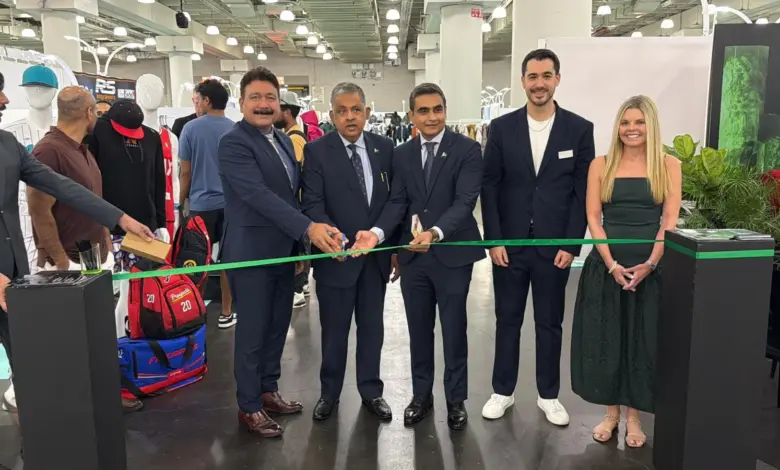
New York, July 29, 2026: Pakistan marked a strong presence at Texworld New York City 2026, one of North America's leading international textile sourcing exhibitions, with the inauguration of the Pakistan Pavilion at the Jacob K. Javits Convention Center, New York.
The Pakistan Pavilion was formally inaugurated by the Ambassador of Pakistan to the United States, H.E. Mr. Rizwan Saeed Sheikh, in along with the Consul General of Pakistan in New York, Mr. Aamer Ahmed Atozai, and Trade & Investment Counsellor, Mr. Adnan Mahmood Awan.
Organized by the Trade Development Authority of Pakistan (TDAP) in collaboration with the Trade & Investment Wing of the Consulate General of Pakistan, New York, the Pavilion highlights Pakistan's growing capabilities in value-added textiles, apparel, leather products, sports goods, and home textiles.
Addressing the participants, Ambassador Rizwan Saeed Sheikh highlighted the vital role of Pakistan's textile sector in the national economy and reaffirmed the Government's commitment to promoting exports and strengthening commercial ties with the United States.
Consul General Aamer Ahmed Atozai underscored Pakistan's reputation as a reliable sourcing destination and reaffirmed the Consulate's commitment to facilitating business partnerships between Pakistan and the United States.
Trade & Investment Counsellor Adnan Mahmood Awan said that Texworld New York City offers an important platform for Pakistani exporters to connect with international buyers and expand their presence in the U.S. market.
Five leading Pakistani companies are exhibiting under the Pakistan Pavilion, showcasing a diverse range of products, including home textiles, towels, apparel, leather garments, sportswear, gloves, and textile products. The participating companies are:
• A1 Infinity
• MRI Group
• Hometex Corporation
• Ruqi Sports
• Niza Sports
Throughout the three-day exhibition, the Pakistani exhibitors will engage with buyers and industry stakeholders from across the United States and other international markets, promoting Pakistan's manufacturing excellence, innovation, and export potential.
Pakistan's participation in Texworld New York City 2026 reflects the country's continued commitment to strengthening its presence in global textile markets and fostering long-term commercial partnerships with international buyers. The exhibition runs from July 29 to July 31, 2026, at the Jacob K. Javits Convention Center in New York City.