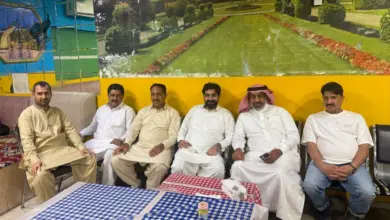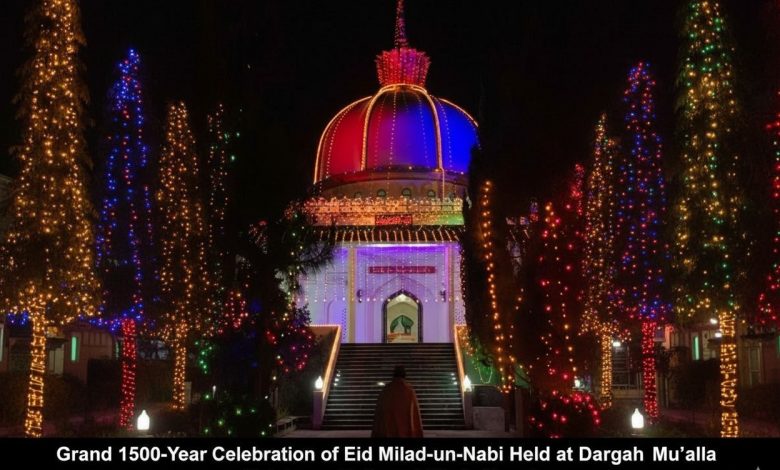
A grand spiritual gathering to mark the 1500-year celebration of Eid Milad-un-Nabi was held at Dargah Mu’alla Gulshan-e-Sultan-ul-Hind, Ajmeri, near the New Islamabad Airport, drawing large numbers of devotees from Rawalpindi, Islamabad and neighboring areas. The event combined Quranic recitation, devotional poetry, religious sermons and the veneration of a sacred relic, creating a deeply reverent atmosphere.
The celebration was led by Sheikh-ul-Mashaikh Hazrat Khwaja Dewan Syed Aaly Habib Ali Khan, the Sajjada Nashin (custodian) of Ajmer Sharif. The shrine and the adjacent Jamia Masjid Moeeniya Chishtiya were illuminated with electric lights for the occasion, giving the complex a festive and spiritual ambience.
Formal proceedings began after the Maghrib prayer with Khatm-ul-Quran and Khatm Khawajgan Chisht, the Chishti order’s devotional completion rites. Quranic recitations were followed by moving naats performed by prominent reciters from Rawalpindi and Islamabad. Several religious scholars addressed the assembly, speaking on the importance of emulating the Prophet Muhammad (peace be upon him) in daily life.
In a keynote address, Pirzada Syed Aaly Wajhi Moeeni Ajmeri, identified as the crown prince and successor to the Sajjada Nashin of Ajmer Sharif, stressed that love and respect for the Prophet form the foundation of faith. He noted that the Companions and the Ahl al-Bayt lived in the Prophet’s company and exemplified how to uphold his teachings, and he urged followers to adopt the Prophet’s example as the path to success in this life and the Hereafter. Pirzada Moeeni also paid tribute to Khwaja Gharib Nawaz, describing the revered Sufi saint as a consummate follower of the Prophet’s Sunnah and honoring him with the title Aata-e-Rasool (Gift of the Prophet).
The gathering reached a spiritual high point with the ziyarat of the Moe Mubarak, a relic believed to be a hair of the Prophet Muhammad, which participants regarded as a cherished and sacred moment. The event concluded with special prayers offered by Dewan Syed Aaly Habib Ali Khan for the welfare of the Muslim community and the prosperity of Pakistan.
The program closed with the distribution of langar, bringing attendees together in communal harmony and reinforcing the event’s themes of devotion, unity and service.