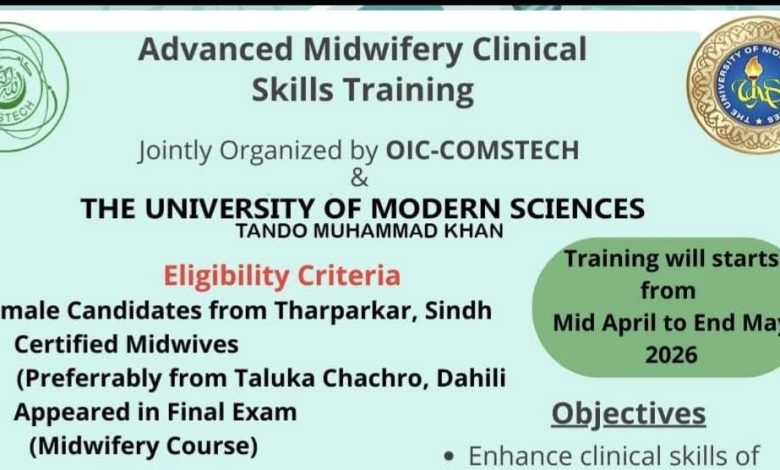
The OIC-COMSTECH, in partnership with The University of Modern Sciences, has launched an Advanced Midwifery Clinical Skills Training program to strengthen maternal and neonatal care services in Tharparkar, Sindh. The Midwifery Training targets female health workers from remote areas to improve outcomes for mothers and newborns.
The program is open to women from Taluka Chachro and Dahili in Tharparkar, including certified midwives and candidates who have appeared in their final midwifery examinations. Selected participants will receive fully funded support covering tuition, accommodation and meals, with applications accepted until March 31, 2026.
Training will take place at the Indus Medical College Hospital in Tando Muhammad Khan and is scheduled from mid-April through the end of May 2026. The intensive clinical curriculum emphasizes hands-on practice and mentorship to build confidence and competence among local providers.
Key aims of the Midwifery Training include strengthening skills for safe delivery practices, enhancing emergency obstetric and neonatal care, promoting community-based maternal and child health awareness, and building capacity in nutrition and emergency response. The program is designed to translate clinical learning into improved care within underserved communities.
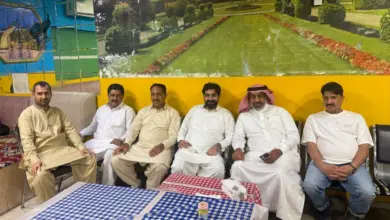
This initiative follows a two-day medical camp in Chachro, Tharparkar, where organizers identified an urgent need for more skilled maternal healthcare providers. The training is presented as a practical, local response to those gaps and seeks to enable sustainable improvements in maternal and newborn survival.
Prof Dr Muhammad Iqbal Choudhary, Coordinator General of OIC-COMSTECH, highlighted the programme’s community focus and the importance of holistic care, noting efforts to sensitize providers on maternal mental health including postpartum depression so mothers receive both clinical and psychosocial support.
OIC-COMSTECH and its national partners intend to use this pilot to expand similar capacity-building initiatives across other marginalized districts in Pakistan and among OIC member states. Interested applicants from the targeted areas are encouraged to apply by the March 31, 2026 deadline to benefit from this fully funded Midwifery Training opportunity.