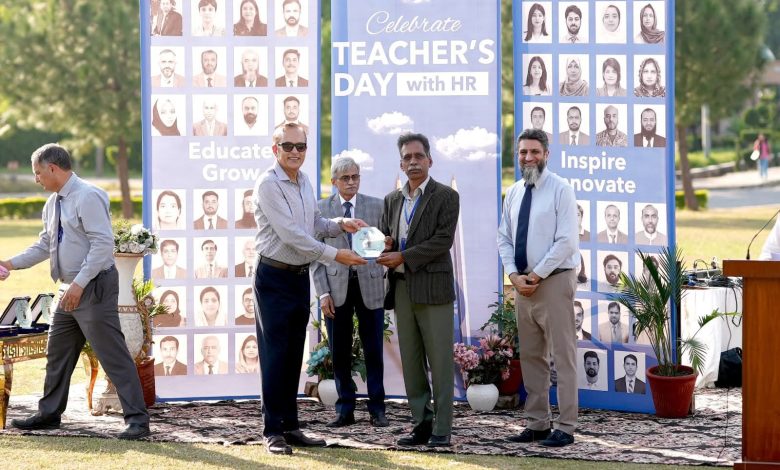
The NUST community gathered to mark Teachers Day in an atmosphere of warmth, laughter and sincere gratitude, paying tribute to the educators who inspire curiosity and shape tomorrow’s leaders. The celebration offered a chance for students, faculty and staff to pause and recognise the everyday impact of teaching across the university.
The afternoon unfolded with lighthearted conversations, friendly games and live music that encouraged connection and celebration. Moments of shared joy and informal exchange created a welcoming space that reflected the spirit of Teachers Day and the value the university places on learning and mentorship.
Dr. Muhammad Zahid Latif, the Rector, joined senior leadership to participate in the festivities and personally thank teachers for their dedication. His remarks underscored appreciation for the tireless efforts of faculty who continue to guide generations with passion and purpose, reinforcing the role of educators in shaping both academic achievement and character.
Long-serving faculty members received tokens of recognition to honour their lifelong commitment and lasting influence inside and beyond the classroom. These gestures celebrated careers defined by persistent dedication, mentorship and a meaningful impact on students and colleagues alike.
The event stood as a heartfelt acknowledgment of teachers as mentors, guides and change-makers who light the way forward. By bringing the community together, NUST reaffirmed its commitment to celebrating the people whose work underpins the university’s mission and the broader advancement of education.