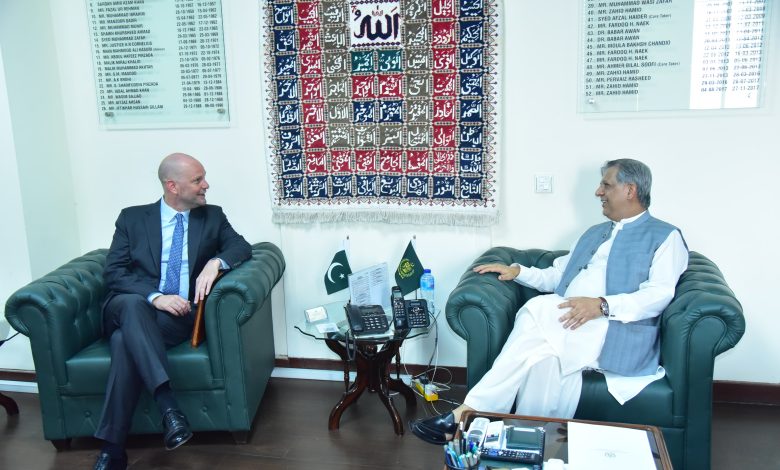
Islamabad: In a recent meeting between Belgium’s Ambassador to Pakistan, His Excellency Idesbald Van der Gracht, and Pakistan’s Federal Minister for Law, Justice, and Human Rights, Senator Azam Nazeer Tarar, both sides reiterated their commitment to enhancing cooperation in areas related to law, human rights, and governance. The discussions highlighted Pakistan’s ongoing efforts to reform its legal framework and improve human rights conditions, alongside Belgium’s support for these initiatives.
During the meeting, Pakistani officials provided an overview of recent developments in the country’s human rights landscape. Minister Tarar noted notable progress, including a reduction in rights violations and enhanced responsiveness of institutions responsible for safeguarding citizens’ rights. The Ministry of Human Rights, in collaboration with other government entities and stakeholders, is actively working to strengthen legal protections, improve mechanisms for accountability, and address challenges faced by vulnerable communities.
A significant focus was placed on recent legislative reforms aimed at modernizing Pakistan’s justice system. The Minister outlined over 110 amendments to the Criminal Procedure Code (CrPC), designed to facilitate greater access to justice for ordinary citizens. These reforms underscore the government’s dedication to legal modernization and inclusive governance. Additionally, the enactment of the Islamabad Capital Territory Child Marriage Restraint Act, 2025, was praised as a crucial step in aligning Pakistan’s child rights laws with international standards. The legislation sets the minimum age of marriage at 18 for both boys and girls, with efforts underway to promote similar reforms across all provinces.
The discussion also touched upon the findings of the Global Gender Gap Report 2025. Minister Tarar expressed concerns that the report’s methodology and data collection gaps may not fully capture ground realities. In response, the Ministry is engaging with research institutions, development partners, and stakeholders to improve data accuracy and ensure future reports reflect genuine progress in gender equality and social justice.
Furthermore, the future of Pakistan’s death penalty policy was a key topic. The government is currently debating a potential shift towards alternative sentencing options, such as life imprisonment, for certain offences. This possibility aligns with evolving global human rights standards and reflects Pakistan’s openness to reforming its justice policies.
Ambassador Van der Gracht acknowledged Pakistan’s reform trajectory, particularly applauding the recent enactment of the National Commission for Minority Rights Act, 2025. This legislation establishes a statutory body tasked with protecting the rights of religious minorities and promoting social inclusivity. The Belgian envoy reaffirmed Belgium’s support for Pakistan’s broader efforts to strengthen democratic institutions, safeguard vulnerable communities, and foster social justice.
Both parties concluded their meeting with a shared commitment to continued cooperation. They emphasized the importance of mutual collaboration in advancing human rights, legal development, and inclusive policy reforms, signaling a positive outlook for future partnerships.