Representatives of Pakistan’s textile sector urged the government to accelerate the shift to green energy and actively promote solar adoption to reduce pressure on the national grid and manage seasonal demand swings. The call stressed that industrial solar is a practical route to lower costs and improve energy security for manufacturers.
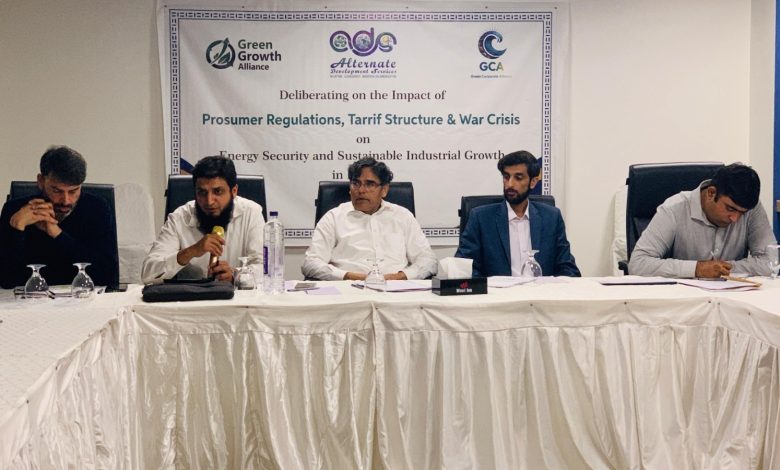
At a seminar titled “Deliberating on the Impact of Prosumer Regulations, Tariff Structure and War Crisis on Energy Security and Sustainable Industrial Growth in Pakistan,” participants warned that moving from net metering to net billing risks discouraging new industrial solar projects and could push businesses toward expensive battery energy storage systems instead of more economically viable tariff-based solutions.
Speakers highlighted deep policy uncertainty, noting slow progress on key power sector reforms such as CTBCM and ISMO and limited optimism about privatization. Industry leaders said uninterrupted and affordable energy is vital for Pakistani manufacturers to remain competitive with regional exporters in India, Bangladesh and Vietnam.
The event was organised by Alternate Development Services in partnership with Green Growth Alliance and Green Corporate Alliance. Amjad Nazeer, CEO of Alternate Development Services, urged timely and consistent energy policy, warning that delays and mixed signals could erode recent economic gains and deter investment in industrial solar and other renewables.
Dr Syed Ali Abbas Kazmi of NUST outlined structural challenges in Pakistan’s energy sector, including rising tariffs, high financing costs and policy inconsistency, all of which raise investment risk and reduce returns. He cautioned that without concrete reforms industrial growth may stagnate.
Ali Ahsan of the Pakistan Solar Association said solar deployment is likely to continue growing as it has over the past five years despite uncertain tariff and regulatory choices, adding that many businesses no longer rely on government assurances for stable and affordable transmission and supply.
Panellists from industry, academia and industrial bodies pressed for a national carbon accounting system and stronger industry-academia collaboration to improve data quality and support decarbonisation. They recommended linking industrial zones to renewable energy parks, encouraging indigenous solutions and aligning export supply chains with global compliance requirements.
Experts emphasised that international carbon regulations and buyer expectations make solarisation, energy efficiency and supply chain compliance mandatory for market access. There was broad consensus that advancing industrial solar and renewables is essential to reduce production costs, meet global environmental standards and strengthen Pakistan’s export competitiveness while maintaining grid stability.