Pakistan

Rights-Based Border Management in Pakistan Shows Impact

A Denmark-funded initiative is modernizing Pakistan’s border management by expanding a second-line control model at major international airports, upgrading forensic and information-sharing systems, and strengthening local capacity to detect identity fraud and curb irregular migration. The project, led by the International Centre for Migration Policy Development in partnership with Pakistan’s Federal Investigation Agency, has moved beyond a pilot at Islamabad to additional airports and is delivering practical improvements on the ground.

The Rights Based Border Management in Silk Route Countries project is financed by Denmark and implemented by ICMPD in close cooperation with the Federal Investigation Agency. It aims to improve border security while protecting rights, focusing on practical tools and training for frontline officers who handle travel documentation and passenger screening.

Following a successful roll-out of the Second Line Border Control concept at Islamabad International Airport, the project has been expanded to five more international airports: Karachi, Lahore, Multan, Sialkot and Peshawar. These Second Line Offices provide FIA officers with enhanced capabilities in document verification, detection of identity fraud and risk profiling, strengthening the frontline response to irregular migration and related cross-border crimes.

Beyond airport operations, the project is investing in upgraded forensic laboratories, more robust information-sharing systems, and targeted capacity-building initiatives. These measures are intended to create sustainable improvements in investigative and verification capacity and to support a modernized, risk-informed approach to border management.

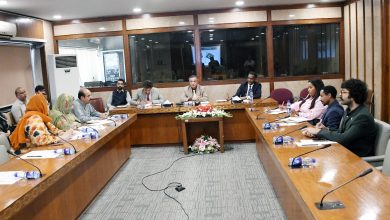
A delegation including Denmark’s Regional Migration Attaché Kitty Nielsen and officials from the Iraqi government visited Pakistan to review progress, accompanied by Danish Chargé d’Affaires a.i. Peter Emil Nielsen. The visitors met with ICMPD and FIA representatives to assess project interventions and underscore the value of international cooperation in delivering safer, smarter border systems.

Related Articles

Leave a Reply

Your email address will not be published. Required fields are marked *

Back to top button