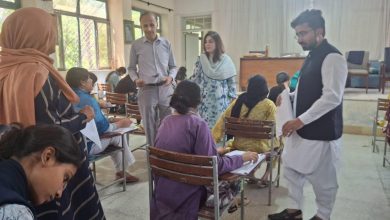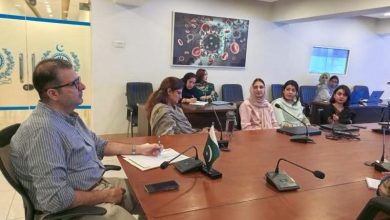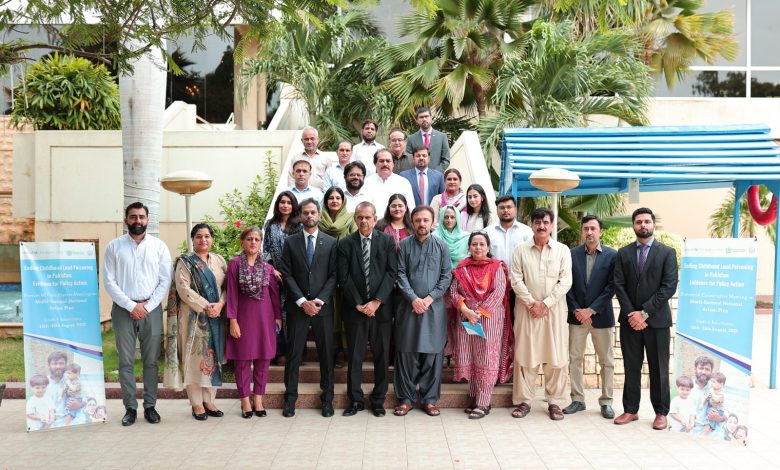
Senior health officials, policymakers, and stakeholders gathered at Avari Towers Karachi for a major consultation focused on tackling lead poisoning among children in Sindh. Hosted by the Ministry of National Health Services, Regulations and Coordination (MoNHSR&C) in partnership with UNICEF and Health Services Academy, the two-day event brought together provincial health departments, environmental agencies, food authorities, business leaders, pediatricians, academics, and civil society representatives. The central aim was to develop a national multi-sector action plan to address the preventable, yet serious, public health threat of lead poisoning, which currently affects millions of children across Pakistan.
During opening remarks, Dr. Rehan Rauf, Deputy Director for Food and Environmental Change at the Ministry of National Health, cited alarming figures: more than 40 million Pakistani children have blood lead levels exceeding internationally recognized safety limits. He emphasized that even low levels of lead exposure can cause irreversible damage to brain development, reduce IQ, and result in lifelong health issues. Drawing on recent research by Aga Khan University and LEEP, Dr. Rauf warned that Sindh can no longer afford to delay decisive action.
Experts at the meeting highlighted that the burden of lead poisoning is particularly acute in urban and industrial areas, where unregulated smelting, recycling, and manufacturing are major sources of toxic pollution. Pregnant women and young children are especially vulnerable, with long-term negative impacts on both public health and the national economy.
A representative from the Ministry of National Health reaffirmed the government’s commitment, stating that addressing lead poisoning is not just a technical challenge but a moral responsibility. The official advocated for stronger inter-sectoral coordination, evidence-based policymaking, and strict enforcement of environmental regulations to protect children from this preventable hazard.
UNICEF’s Dr. Humaira Irshad outlined the major challenges in eliminating childhood lead poisoning and reiterated UNICEF’s ongoing support in implementing the national action plan. She assured stakeholders of UNICEF’s commitment to providing technical and resource assistance in crafting and executing an effective, evidence-based strategy to protect Pakistan’s children from this silent threat.
Dr. Maryam Sarfraz, Principal Investigator at the Health Services Academy, stressed the need for a sustainable national framework. She emphasized that the work extends beyond just gathering data, highlighting efforts to establish systems for ongoing surveillance, risk analysis, and targeted interventions, especially in high-risk communities. She also acknowledged the pivotal support from Sindh and Balochistan’s health leadership in advancing this initiative.
Participants concluded the consultation with a strong consensus: eliminating childhood lead poisoning in Pakistan requires robust government leadership, solid epidemiological evidence, and a coordinated, multi-sectoral response. Emphasis was placed on the importance of integrated policies, effective regulatory enforcement, and community-level engagement to address the complex environmental and public health challenges posed by lead exposure.