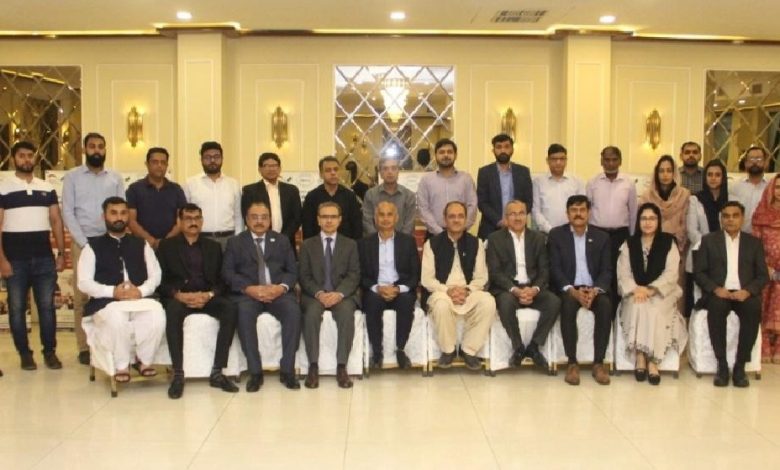
The Punjab Local Government Department hosted a workshop in Lahore focused on advancing sustainable solutions for municipal services across the province. Organized in collaboration with the Punjab Municipal Development Fund Company (PMDFC) and GIZ, the event brought together senior government officials, local representatives, and development partners to discuss recent progress and future initiatives aimed at strengthening local governance.
The workshop, titled “Strengthening Local Services – Reflections on Sustainability,” attracted participation from Secretary Local Government Shakil Ahmad Mian, Special Secretaries Arshad Baig and Asia Gul, MD PMDFC Zahid Aziz, as well as representatives from GIZ and local government teams from Toba Tek Singh, Jhelum, Sheikhupura, and Lahore.
A prominent feature of the workshop was the introduction of a new sewage kit designed to enhance the effectiveness and sustainability of municipal sewage services. Attendees also viewed a documentary that highlighted successful local initiatives, emphasizing practical approaches to improving service delivery.
During the event, Secretary Shakil Ahmad Mian showcased the positive impact of the new e-billing system, noting significant improvements in government revenue collection and overall service delivery. He also announced the adoption of formal rules for the registration of minority marriages, underscoring the department’s commitment to inclusivity. Additionally, he highlighted the importance of training and capacity building for local institutions.
Special Secretary Asia Gul detailed the creation of Women Facilitation Centers, aiming to promote gender inclusion throughout local government services. MD PMDFC Zahid Aziz reiterated his organization’s dedication to supporting local municipalities by providing ongoing technical assistance and resources.
The workshop concluded with a collective commitment from all participants to enhance the sustainability of local services, ensuring they are effective, inclusive, and responsive to community needs.