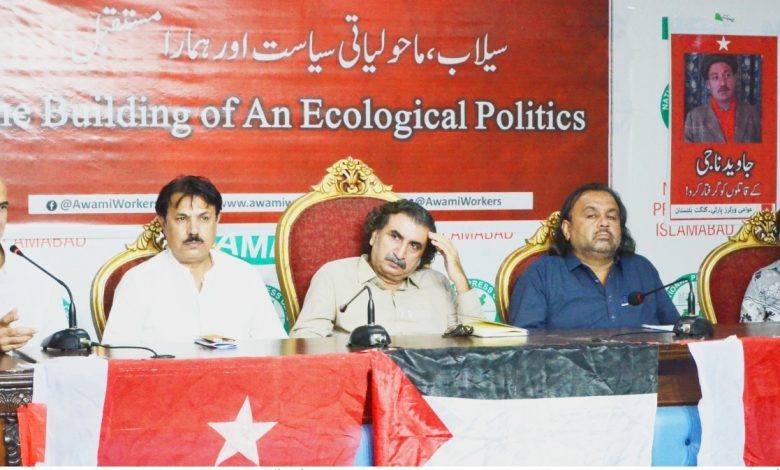
Speakers at a seminar in Islamabad organized by the Awami Workers Party argued that the recent devastating floods were not merely natural disasters but the predictable outcome of state policies, neoliberal development models and unplanned construction that prioritize profit over people and the environment. They warned that powerful commercial and state-linked interests have driven ecological destruction, and called for a broader “environmental politics” that links ecological protection with social justice, workers’ rights and opposition to exploitative development and external debt.
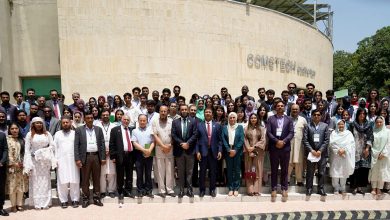
The event, held at the National Press Club, brought together students, progressive political activists, residents of informal settlements, intellectuals and citizens from the twin cities and beyond. Addressing the gathering, speakers Bakhshal Thalho, Asim Sajjad, Baba Jan, Neelam Nigar, Zubair Tor Wali and Tuba Syed accused timber and real estate mafias, large hotel owners, mining companies and military-affiliated construction bodies such as the Frontier Works Organization and the National Logistics Cell, as well as businesses operating under the banner of “green tourism,” of driving uncontrolled construction and environmental degradation.
While acknowledging that climate change and rising temperatures contribute to extreme weather, the speakers stressed that the crisis has been deepened by the ruling class’s pursuit of profit. They said state institutions and the current development model systematically dispossess working people of land, water, forests and mineral resources, converting natural assets into financial gains for elites at the expense of communities and ecosystems.
The panel strongly criticized post-flood calls for large dam projects as misguided and harmful. Citing the Diamer-Basha dam as an example, they argued that such megaprojects cause environmental damage, displace local populations, destroy agricultural land and further entangle the country in external debt whose costs fall on working people. They warned that these projects often benefit contractors and lenders rather than affected communities.
Speakers also expressed regret at what they described as the political and intellectual establishment’s silence on these issues, accusing many leaders of focusing on power struggles and personal gain instead of addressing systemic causes of ecological collapse. They criticized the government for staging photo-ops with flood victims while simultaneously engaging in diplomacy to secure international climate-related aid, framing these actions as insufficient and hypocritical.
As an alternative, the seminar’s participants endorsed a politics of environmental justice that extends beyond conservation to include defending workers’ rights, ending exploitation, opposing imperialist debt and empowering marginalized regions. They emphasized the impact on the country’s young population—millions under the age of 25—who face an increasingly precarious future as ecological conditions worsen.
The meeting concluded with a pledge by progressive forces to sustain the struggle for environmental justice and to build a nationwide popular movement to challenge the exploitative systems and policies they hold responsible for the current crisis.