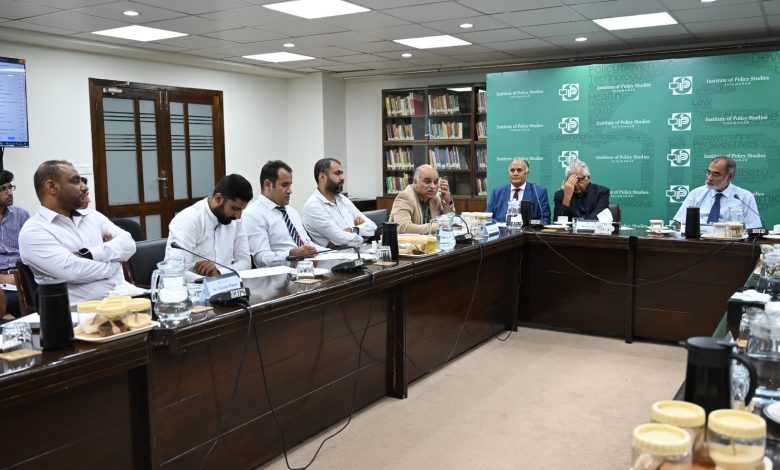
A panel of climate and sustainability experts at a roundtable organised by the Institute of Policy Studies in Islamabad urged immediate, integrated measures to improve flood resilience across Pakistan. The discussion brought together specialists in climate science, disaster response, water management and community aid who stressed that floods, heatwaves and declining water quality are interconnected threats to food security, livelihoods and biodiversity.
Dr. Pervaiz Amir warned that Pakistan’s climate extremes go beyond flooding, with rising temperatures and shrinking winters undermining agriculture and ecosystems. He advocated raising national forest cover from below 1 percent toward far higher levels and prioritising dams and water diversion projects to capture monsoon rains for use in dry seasons, a proposal framed as essential to long-term flood resilience.
Dr. Ghulam Rasul recommended that urban planning adopt vertical expansion and protect natural waterways while integrating climate projections into town planning. Speakers argued that such planning reforms will reduce exposure to flooding and help cities adapt as extreme events become more frequent.
Experts emphasised strengthening local capacity so communities act as first responders. Syed Ikram ul Haq suggested investments in dual‑use infrastructure such as tourism facilities that can serve as shelters during disasters, and called for integrating data and AI tools into early warning and disaster management systems to enhance responsiveness and decision making.
Several panelists highlighted recent Glacial Lake Outburst Floods in northern Pakistan, where massive boulders and sudden flows devastated communities, underscoring the need for targeted early warning and local preparedness for GLOF events. Economic opportunities linked to floods were also noted, with Dr. Syed Tahir Hijazi pointing to fisheries and run‑of‑river hydropower as avenues to turn flood risks into productive assets when managed proactively.
Concerns about deteriorating water quality were raised by Dr. Imran Hashmi, who detailed threats from microplastics and harmful microorganisms and urged indigenous solutions for waste and sewage management rather than reliance on external donors. Yasir Riaz added that floods that once seemed centennial are now recurring more frequently, and that much of the devastation stems from weak local capacity rather than climate change alone.
On scientific preparedness, Dr. Mujtaba Hassan stressed that updated atmospheric and climate research must feed directly into national early warning systems. Mirza Hamid Hassan noted Pakistan’s dependence on external water release warnings and called for indigenous forecasting competence, citing unannounced releases that violated understandings under the Indus Waters Treaty.
Contributors agreed that effective flood resilience requires coordinated short, medium and long‑term strategies and capacity building from grassroots to national institutions. Khalid Rahman underlined that integrated approaches — combining water storage, improved governance, early warning systems and local training — are vital to safeguard people, water resources and livelihoods as climate risks intensify.