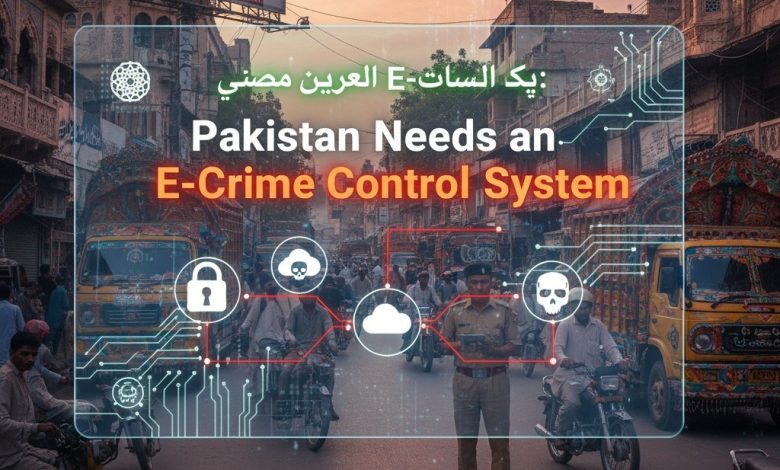
Digital rollout in Pakistan has often meant more cameras on roads and faster E-Challan processing, but the same momentum has not reached crime prevention and victim protection. An E-Crime Control approach would repurpose technology to protect life, property and dignity rather than only to collect fines.
The contrast is stark: traffic violations are identified within seconds by smart cameras while victims of theft, assault, land grabbing or harassment face delays, bribery and humiliation when they seek help. Filing an FIR frequently becomes a prolonged struggle through hospitals, police stations and courts, with ordinary citizens bearing the burden of a system that punishes quickly but protects slowly.
Globally, e-governance is intended to serve people by simplifying access to justice, health and education. Nations such as the UK, Japan, Saudi Arabia, the UAE and Turkey use digital tools to connect citizens to services and security. Pakistan needs the same orientation: an E-Crime Control framework that lets technology identify offenders and corrupt actors as swiftly as it spots a speeding vehicle.
The state has a constitutional and moral duty to safeguard citizens. Article 9 states, “No person shall be deprived of life or liberty save in accordance with law.” Article 25 declares, “All citizens are equal before the law.” Islamic examples of governance remind us that mercy and justice must guide policy — when famine struck during the caliphate of Hazrat Umar (RA), punishments were suspended to ease hardship, and Hazrat Ali (RA) warned that a state cannot survive injustice.
Practical reforms must follow this mandate. The government should establish an E-Crime Control Authority to digitally link police, courts and citizens. Through a nationwide platform people could file complaints, upload evidence, and track case progress in real time, reducing opportunities for bribery and influence and ensuring accountability across institutions.
Before expanding systems that increase revenue through fines, policymakers should focus on raising living standards and delivering basic services. Citizens already pay indirect taxes on essentials yet receive limited public services in return. Prioritizing employment, health and security alongside digital development will restore trust and make technology meaningful.
Turning technology toward compassion requires a shift in priorities: less automated punishment and more accessible justice. Implementing E-Crime Control now would signal that digital governance exists to protect citizens, not to scare them, and would be a decisive step toward a safer, fairer Pakistan.