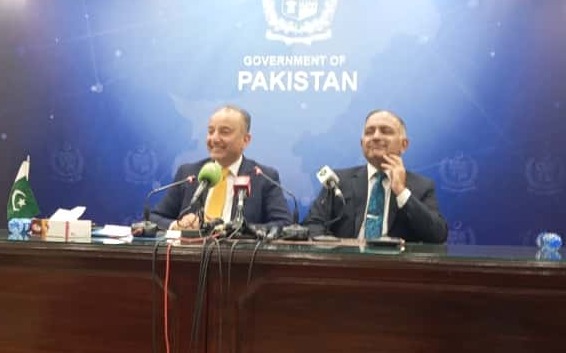
Senator Musadik Masood Malik and Lieutenant General Inam Haider Malik unveiled a three-tier national climate resilience plan approved by the Prime Minister as the government prepares for a monsoon season projected to be 22 to 26 percent more intense in 2026. The NDMA’s scientific modelling underpins the strategy and makes early action a priority across federal and provincial agencies.
Minister Malik urged political priorities to shift toward the suffering of vulnerable communities, stressing that citizens should come before rhetoric. He highlighted that recent floods resulted in economic losses exceeding 9 percent of GDP, between 4,570 and 4,600 lives lost, and nearly 40 million people displaced across four major flood events. The most recent disaster alone displaced 3.1 million people and caused an estimated loss of 120 million school days for about two million children.
The plan is built around a phased approach. The short-term phase over the next 200 to 250 days focuses on urgent repairs to embankments, floodgates, levees and drainage systems, plus the rapid deployment of temporary schools and mobile healthcare units to limit education disruption and provide timely medical support.
The medium-term phase spanning one to three years will prioritise expansion of urban drainage networks and other resilience upgrades, while the long-term phase over three to five years will invest in resilient structures and river training projects designed to control water flow, protect settlements and restore natural river courses.
A central element is the decentralisation of Early Warning Systems so alerts reach tehsil and district administrations directly. Newly installed screens will enable deputy commissioners and assistant commissioners to act as first responders, and local communities will be trained to evacuate safely within the crucial 60 to 90 minutes after an alert — reinforcing the core goals of the country’s climate resilience efforts.
NDMA Chairman Lieutenant General Inam Haider Malik gave a scientific briefing noting rising glacier melt of 2 to 3 percent annually and more than 50 identified high-risk glacial lake outburst flood sites. He said Pakistan’s National Emergency Operations Center now integrates over 370 satellite feeds and more than 10,000 digital climate layers to produce reliable six- to eight-month projections comparable to many advanced systems.
On illegal construction, the Prime Minister has ordered demolition of unauthorised buildings, especially hotels and resorts inside river corridors in areas such as Gilgit Baltistan, and called for accountability for officials who permitted zoning violations. A coordinated programme with provinces will aim to prevent future encroachments on river corridors.
Financing will draw on domestic Annual Development Plans, a $2 billion climate allocation under the IMF programme and a long-term $20 billion resilience plan with the World Bank, but officials say implementation, not funding, is the principal challenge. Progress will be overseen through quarterly Prime Minister reviews, a monthly ministerial committee and weekly implementation team meetings, with regular media engagement to maintain transparency as Pakistan scales up its climate resilience measures.