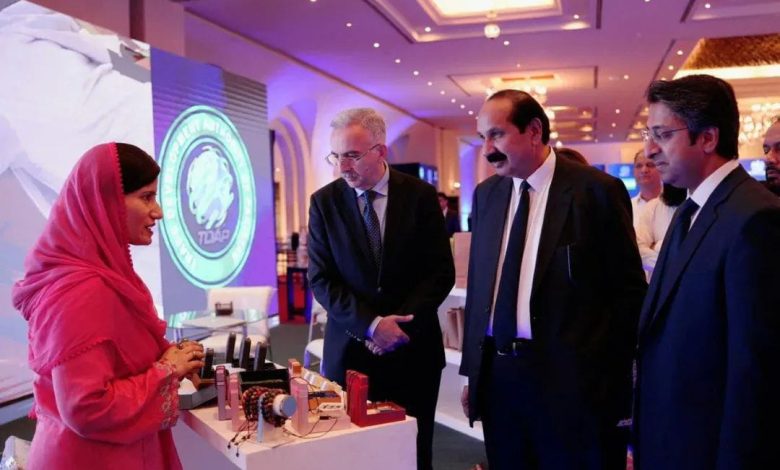
The Trade Development Authority of Pakistan (TDAP) and the Ministry of Commerce successfully organized the inaugural GLOBE Pakistan Summit 2025, significantly boosting the nation’s efforts to enhance digital trade, expand e-commerce capabilities, and strengthen regional connectivity.
Held at the Serena Hotel in Islamabad, the summit represented a key milestone in Pakistan’s path toward establishing a robust digital economy. Highlighting the event’s significance, Mr. Rana Ihsan Afzal Khan, Coordinator to the Prime Minister on Commerce, inaugurated the event. In his opening remarks, he emphasized the government’s dedication to developing a secure, compatible, and globally integrated digital trade system that meets international standards and leverages Pakistan’s digital commerce potential.
Distinguished keynote speakers included Mr. Faiz Ahmad Chadhar, Chief Executive of TDAP; Mr. Jawad Paul, Secretary Commerce; and Ms. Amna Baloch, Foreign Secretary. Each speaker reinforced the government’s commitment and outlined strategic initiatives designed to position Pakistan as a regional hub for digital commerce and trade connectivity.
The summit drew significant diplomatic engagement, with representatives from more than ten countries attending and actively participating. Additionally, the presence of Mr. James Dong, President for International Markets at Alibaba International, highlighted growing international confidence and keen global interest in Pakistan’s evolving digital economy.
Overall, the GLOBE Pakistan Summit 2025 was widely regarded as an important platform that facilitated discussions and cooperation among national and international stakeholders, positioning Pakistan strategically to capitalize fully on emerging e-commerce opportunities and regional digital connectivity initiatives.