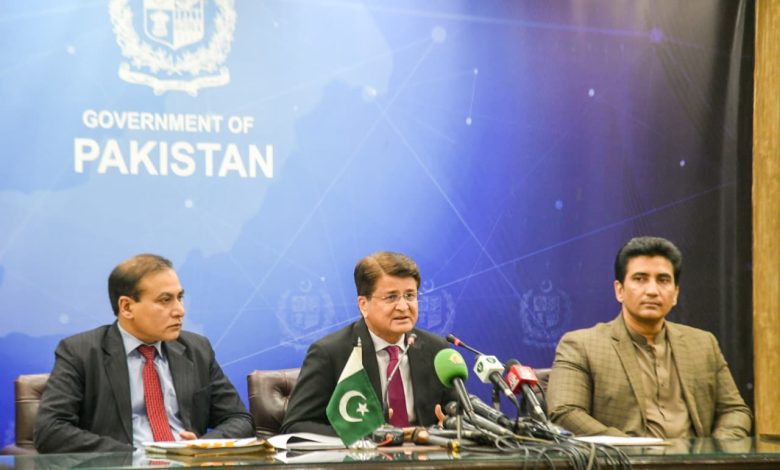
Hassanat Ahmad Qureshi, Managing Director of the Public Procurement Regulatory Authority (PPRA), outlined a major reform drive that aligns Pakistan’s public procurement with international standards under the Prime Minister’s Digital Pakistan vision. At the center of the reforms is the national e-procurement platform, now moving into its next phase with the rollout of ePADs 2.0.
The integrated platform has already delivered large-scale adoption: 9,846 government entities, 600 foreign companies and some 43,000 suppliers are registered on the system. In the last fiscal year ePADs processed PKR 1,408.58 billion in procurement across 526,271 transactions, demonstrating the platform’s rapid operational scale and financial reach.
PPRA has connected ePADs with key national systems including the Federal Board of Revenue, NADRA, the Securities and Exchange Commission of Pakistan, the Pakistan Engineering Council, the Financial Accounting and Budgeting System (FABS), provincial revenue authorities and the Drug Regulatory Authority. Dedicated dashboards have been provided for oversight bodies including the Auditor General, NAB, the Pakistan Engineering Council and the Competition Commission, enabling verification of each transaction and strengthening auditability.
The platform has already changed market behaviour by increasing competition and reducing collusion. Average participation in open bidding has risen to five to seven bidders compared with two to three under traditional methods. Small purchases and quotations are now recorded on ePADs, complaint resolution tools help block blacklisted firms and the system flags procurement delays while improving compliance with procurement rules. Live online broadcasting of bids above PKR 500 million and construction tenders above PKR 1 billion has also been enabled.
ePADs 2.0 is scheduled for a federal launch in January 2026, followed by deployments in Gilgit-Baltistan and Azad Jammu and Kashmir in February and provincial rollouts in March. Monitoring and analytics reporting will begin in July, while donor-funded procurement is planned to move onto the platform by September 2026. PPRA is also working to launch an online Procurement Academy in October and implement Open Contracting Data Standards by December.
Legal and regulatory reforms remain in their final stages. Amendments to the PPRA Ordinance 2002, preparation of the new Public Procurement Rules 2025 and revision of bidding documents will introduce measures such as an independent complaints mechanism, mandatory e-procurement and e-disposal, procurement cells within agencies and structured professional training for procurement practitioners.
Capacity building has been a key pillar of implementation. PPRA reports more than 10,000 officers trained to date, with 2,499 officials and supplier representatives trained during 2024–25 in partnership with leading universities including NUST, LUMS, IBA and Air University. A standardized training framework and credentialing for procurement professionals are under development to institutionalize these gains.
Institutional changes at PPRA include merit-based hiring of market specialists, IT professionals and a pool of independent experts to strengthen oversight. The authority has set up an ePADs Training Centre and a 16-hour help desk to provide ongoing support to agencies and suppliers. According to Hassanat Ahmad Qureshi, these reforms aim to eliminate ambiguity, enhance transparency, reduce corruption and improve efficiency and competition across public procurement.
As Pakistan prepares for the nationwide adoption of ePADs 2.0, PPRA’s combined regulatory, technical and capacity-building measures signal a sustained shift toward digital, accountable and professionally governed procurement at federal and provincial levels.