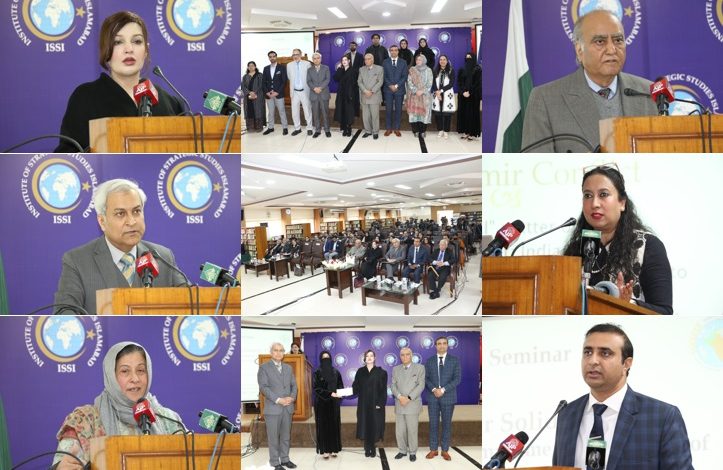
The India Study Center at the Institute of Strategic Studies Islamabad marked Kashmir Solidarity Day with a seminar that reaffirmed Pakistan’s commitment to the right of self-determination and highlighted ongoing human rights concerns in Indian Illegally Occupied Jammu and Kashmir. The event opened with a Fatiha in memory of President Azad Jammu and Kashmir Sultan Mehmood Chaudhry and a tribute to his lifelong service to the Jammu and Kashmir cause.
Ambassador Khalid Mahmood, Chairman of the ISSI Board, welcomed participants and framed the dispute through political, legal, and humanitarian lenses. He stressed that United Nations Security Council resolutions remain valid and underlined the humanitarian crisis faced by Kashmiris under occupation, calling for renewed international attention to protect fundamental rights and uphold the principle of self-determination.
Mushaal Hussein Mullick, former special adviser to the Prime Minister on human rights and women, spoke as Chief Guest about the human cost of the conflict and her personal connection as a Half-Widow. She described the systematic denial of basic rights in IIOJK, naming political prisoners and demanding extraordinary measures, including an international board of peace and protections for detainees such as her husband.
Ambassador Tahir Andarabi, Spokesperson at the Ministry of Foreign Affairs, addressed the legal complexities of the Jammu and Kashmir dispute and reiterated that UN resolutions remain applicable until replaced or implemented. He cited documented violations since 2019, including arbitrary detentions, curbs on civil liberties, and environmental and economic harms tied to military deployments and resource exploitation.
Dr Khurram Abbas, Director of the India Study Center, noted the heightened significance of Kashmir Solidarity Day in light of developments such as Operation Bunyan-ul-Marsoos and warned of the dispute’s escalation potential. He highlighted ISSI’s youth engagement initiatives, including a nationwide essay competition that encouraged young researchers to examine multiple aspects of the Jammu and Kashmir issue.
In an academic presentation titled Pathways to Peace Dr Maria Saifuddin Effendi analyzed the dispute as a multi-level conflict and described the structural violence impacting Kashmiri life. She argued that the revocation of Articles 370 and 35-A has shifted demographic and political realities in IIOJK and undermined prospects for a free and fair plebiscite, stressing the need for sustained international scrutiny.
Mrs. Shamim Shawl of the All Party Hurriyat Conference highlighted the resilience of Kashmiri women and the community’s resistance to occupation. She urged Pakistan to use its diplomatic standing to raise the plight of Half-Widows and other victims at international fora, while condemning discriminatory practices and environmental damage in the occupied territory.
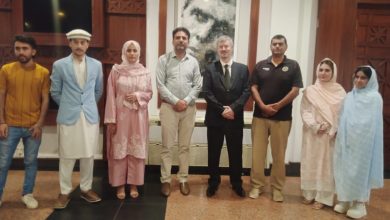
The event also celebrated civic engagement through the India Study Center’s essay competition. Winners were announced and prizes were distributed by the Chief Guest, reflecting an emphasis on youth-led research and sustained advocacy on Kashmir Solidarity Day and beyond.