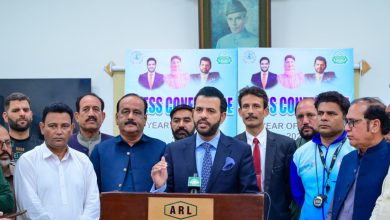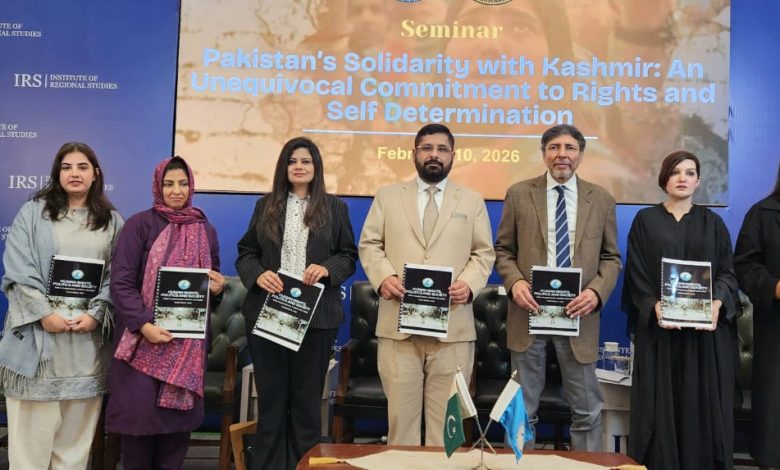
The Institute of Regional Studies in Islamabad unveiled its Annual Report 2025 on Indian Occupied Jammu, Kashmir and Ladakh at a seminar that brought together human rights advocates, lawmakers and academics to review security and human rights trends across the region. Speakers included Mushaal Hussein Mullick, Senator Asad Qasim, Ambassador Jauhar, Professor Dr. Muhammad Khan, Dr. Sundas Mustaqeem and Dr. Gul-i-Ayesha from NUST, who discussed the report’s findings and wider diplomatic implications.
Ambassador Jauhar framed the Kashmir dispute in historical and diplomatic terms, stressing that the issue remains on the United Nations agenda and requires renewed international outreach and awareness. Senator Asad Qasim highlighted the humanitarian toll of prolonged instability, drawing attention to detainees, divided families and community-level trauma, and arguing that regional peace depends on credible international mechanisms to address the dispute.
Mushaal Hussein Mullick described the year as a continuing human tragedy that impinges on daily life and cautioned that the dispute remains a serious nuclear flashpoint. She urged the international community to move towards arrangements for an impartial and free plebiscite, a position echoed by other panellists who praised the report as a comprehensive, evidence-based account of political developments, security practices and human rights conditions in IIOJK.
The report documents sustained large-scale security operations and extensive restrictions on civilian life throughout 2025, recording approximately 700 raids and more than 4,000 detentions across IIOJK. Preventive and mass detentions occurred in successive phases: in February over 500 people were detained in Kulgam, Budgam and Ganderbal following a security incident; after the Pahalgam incident in April an estimated 1,500–2,000 detentions were reported across multiple districts; a November crackdown produced roughly 1,500 detentions within two days alongside more than 100 additional detentions in districts including Anantnag, Kathua, Ramban, Doda and Rajouri; and December operations added around 200 further detentions. In Ladakh, at least 75 protest-related detentions were recorded between late September and early October.
Search and raid activity was similarly widespread, with the report noting over 500 locations raided across the Valley in November alone, including more than 200 in Kulgam, over 150 residences in Srinagar and upwards of 50 in Sopore. Following the Pahalgam incident, raids affected more than 60 locations in Srinagar. The report also records at least nine residential demolitions in April, a two-month suspension of VPN services in Rajouri, enforcement actions against media offices and, during protest-related unrest in Ladakh, at least four civilian deaths and between 65 and nearly 100 injuries.
Speakers at the seminar reiterated the need for sustained documentation and international engagement, noting that the report’s detailed statistics and analysis aim to inform policymakers and advocacy efforts. The event closed with a joint appeal for a free and impartial plebiscite in IIOJK as the only definitive mechanism, the panellists said, to secure lasting peace in South Asia.