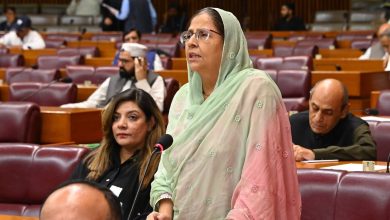
Gohar Ejaz former caretaker federal minister and Chairman Economic Policy and Business Development think tank lauded Prime Minister Shehbaz Sharif for introducing mortgage housing finance, terming it a step in the right direction toward boosting home ownership.
He said the initiative would not only support the middle class in acquiring homes but also stimulate economic activity through increased participation of the private housing and construction sectors.
Business leaders on Monday termed the government’s housing mortgage initiative a critical step toward economic revival and middle-class empowerment, stressing that the private sector should be included in the scheme—particularly private housing finance companies and developers—to ensure scale, efficiency and wider access.
Dr. Ejaz described mortgage financing as “the biggest support for the middle class hoping to own a house or an apartment in a lifetime,” calling it a cornerstone for inclusive economic growth.
However, he stressed that the current framework needs urgent recalibration to align with market realities.
“Mortgage financing for economic growth is essential, and it is the biggest support for the middle class hoping to own a house or an apartment in a lifetime,” Ejaz said. “But banking facilities must meet the criteria of the market—Rs10 million is too small, even for a four-marla house in any of the top five cities of Pakistan where this mortgage scheme is expected to operate.”
He further argued that the State Bank of Pakistan must adopt a more expansive policy approach. “The central bank must allow private sector housing finance companies—approved by the Securities and Exchange Commission of Pakistan as non-banking financial institutions—to actively participate in this scheme,” he said. “Large commercial banks are unlikely to effectively entertain small customers at scale, which risks limiting outreach and impact.”
Ejaz emphasized that the government’s initiative represents only the “first step” toward building a structured housing finance ecosystem. “This government has taken the first step, but to truly realize the dream of home ownership, the model must be expanded,” he added, reiterating his demand to increase the financing limit to Rs30 million to reflect actual construction costs.
He also called for the formal inclusion of private developers in a structured manner. “Private developers should be made part of this scheme to facilitate middle- and lower middle-income groups. Large developers must be allowed to directly facilitate customers and pass on financing benefits to small and medium house owners,” Ejaz said.
According to him, integrating private housing finance companies and developers would not only improve access but also enhance efficiency in loan disbursement and project delivery. “A Rs30 million financing framework, supported by private sector housing finance companies approved by SECP, can significantly expand the reach of this initiative,” he noted.
Echoing these concerns, SM Tanveer, Patron-in-Chief of the Federation of Pakistan Chambers of Commerce and Industry, welcomed the government’s move but underscored the need for deeper incentives. He urged policymakers to bring down the markup rate from 5 percent to zero for low- and middle-income segments to make housing finance genuinely affordable.
Stakeholders noted that Pakistan’s housing shortage runs into millions of units, with formal mortgage penetration remaining among the lowest in the region. They said a robust housing finance system—anchored in strong private sector participation—could unlock massive economic activity, given the construction sector’s linkages with over 40 allied industries.
Industry experts further stressed that expanding mortgage financing could help formalize the real estate sector, improve documentation, and boost tax revenues. However, they cautioned that without simplifying procedures, digitizing land records, and ensuring legal protections for lenders and borrowers, uptake may remain constrained.
Ejaz reiterated that the success of the scheme hinges on inclusivity and execution. “If private sector players are integrated effectively and financing limits are aligned with real costs, this initiative can transform the housing landscape,” he said.
While the business community has largely backed the government’s intent, it maintains that timely course correction—particularly increasing the loan cap to Rs30 million, reducing borrowing costs, and widening participation—will determine whether the scheme evolves into a transformative policy or remains a limited intervention.