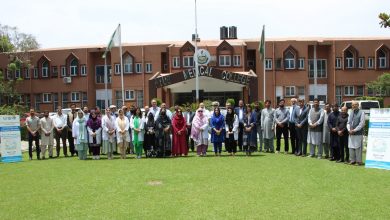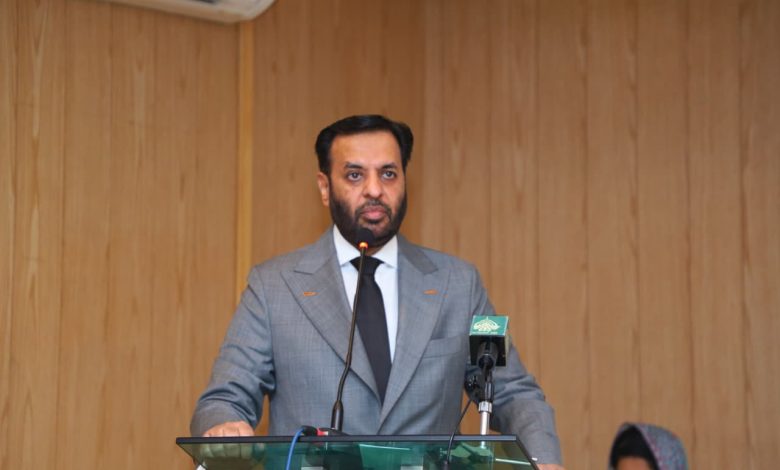
At the Pakistan-China International Academic Conference held at the Shaheed Zulfikar Ali Bhutto Institute of Science and Technology, Federal Minister Syed Mustafa Kamal called for an urgent national move toward preventive healthcare to address mounting health and nutrition challenges as Pakistan’s population grows.
The minister welcomed researchers, professors and media representatives and said academic forums like this promote essential knowledge exchange and international collaboration. He warned that Pakistan, now the fifth most populous country, faces a major challenge in managing public health at scale unless prevention becomes central to policy and practice.
Echoing the adage that “prevention is better than cure,” Syed Mustafa Kamal said the current strain on hospitals stems from a system oriented toward treating illness rather than preventing it. He argued that simply building more hospitals and recruiting doctors will not solve the underlying problem; the health system must be strengthened so people remain healthy and avoid hospitalization in the first place.
Drawing lessons from the COVID-19 pandemic, the minister noted that even advanced health systems can collapse under sudden surges in demand. He said the Ministry of National Health Services, Regulations and Coordination has developed a new health strategy in consultation with international experts aimed at reducing hospital burden while encouraging healthier lifestyles.
The minister stressed the importance of timely decision making and said the time for experimentation has passed. He urged Pakistan to adopt proven strategies and work with global scientists to implement policies that deliver measurable public health gains and promote preventive healthcare across communities.
He also highlighted the value of integrating traditional systems of medicine, including herbal, Chinese and Unani practices, alongside modern care. Citing emerging research in lifestyle medicine, he encouraged policies that align daily living with natural principles to build resilience and slow the rise of chronic conditions driven by distance from traditional ways of living.