Effects of Throwball Training on Body Fat, Muscle Mass, and Psychological Wellbeing
A Research Article
Dr. Mehwish Manzoor Gujjar
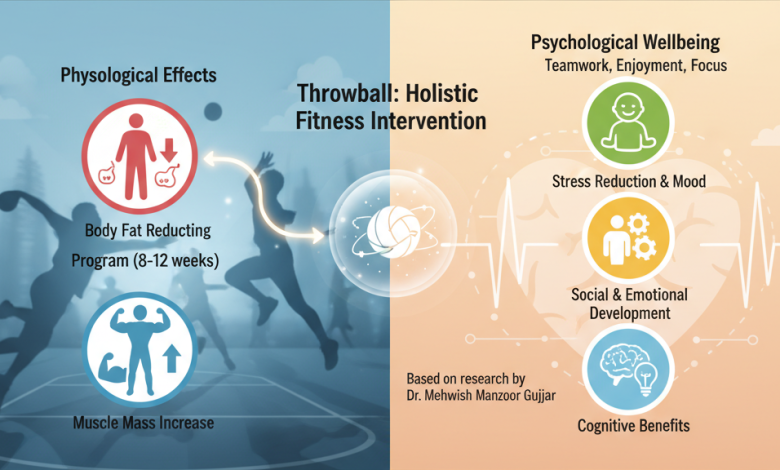
Throwball is a dynamic team sport that integrates aerobic and anaerobic physical activity, promoting overall fitness and psychological wellbeing. This research article examines the effects of structured throwball training on body fat percentage, muscle mass development, and psychological wellbeing. Regular participation in throwball involves repeated running, jumping, throwing, and directional changes, which contribute to improved energy expenditure and muscular activation. The psychological dimension of the sport, including teamwork, competition, and enjoyment, also plays a significant role in reducing stress, anxiety, and depressive symptoms. Findings from sports science literature suggest that throwball training is an effective intervention for improving body composition and enhancing mental health among adolescents and young adults.
Physical inactivity has become a major global health concern, contributing to obesity, muscle weakness, and psychological disorders. In contrast, participation in sports-based physical activities provides a structured and enjoyable method of improving both physical and mental health.
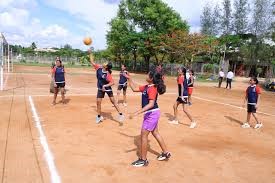
Throwball, a fast-growing team sport, is particularly effective because it combines continuous movement with upper and lower body engagement. Unlike gym-based isolated training, throwball provides functional fitness through real-game situations, making it a practical tool for improving body composition and mental wellbeing.
This study explores how throwball training influences three key variables:
- Body fat percentage
- Muscle mass development
- Psychological wellbeing
To analyze the impact of throwball training on body fat reduction.
- To evaluate changes in muscle mass due to regular throwball participation.
- To assess the psychological wellbeing of players engaged in throwball training.
- To determine the effectiveness of throwball as a holistic fitness intervention.
This study is significant for:
- Physical education teachers and coaches
- Sports scientists and researchers
- School and university students
- Health and fitness professionals
- Policy makers in sports development
It provides evidence-based insights into how throwball can be used as a low-cost, accessible, and effective fitness activity.

Previous research in sports science highlights that team sports significantly improve cardiovascular health, muscular strength, and psychological wellbeing.
- ACSM (American College of Sports Medicine) reports that moderate-to-high intensity sports reduce body fat and improve lean muscle mass.
- Weinberg & Gould emphasize that team sports enhance motivation, reduce stress, and improve emotional stability.
- Studies on recreational sports show that intermittent high-intensity movements improve metabolic rate and fat oxidation.
Although limited direct research exists on throwball specifically, related studies on volleyball and net sports indicate similar physiological and psychological benefits.
5.1 Research Design
A quasi-experimental design can be used with pre-test and post-test measurements.
5.2 Sample
- 30–60 participants (male and female)
- Age group: 15–25 years
- Selected from schools or universities
5.3 Intervention
- Throwball training program: 8–12 weeks
- Frequency: 3–5 sessions per week
- Duration: 60–90 minutes per session
5.4 Variables
Independent Variable:
- Throwball training program
Dependent Variables:
- Body fat percentage
- Muscle mass
- Psychological wellbeing
5.5 Tools and Measurements
- Body composition analyzer (or skinfold calipers)
- BMI and weight scale
- Psychological wellbeing questionnaire (e.g., WHO-5 index or similar scale)
5.6 Data Analysis
- Paired t-test (pre vs post comparison)
- Descriptive statistics (mean, standard deviation)
- Physiological Effects of Throwball Training
6.1 Reduction in Body Fat
Throwball involves continuous movement such as sprinting, jumping, and throwing. These activities increase caloric expenditure and enhance fat oxidation. Over time, participants experience a reduction in body fat percentage due to increased energy utilization.
6.2 Increase in Muscle Mass
Throwball engages multiple muscle groups:
- Upper body: shoulders, arms, chest
- Lower body: thighs, calves, glutes
- Core muscles: abdomen and lower back
Repeated training leads to muscle hypertrophy and improved muscular endurance.
6.3 Improved Metabolic Rate
Regular participation increases resting metabolic rate (RMR), leading to better long-term energy balance and weight management.
Psychological Effects of Throwball Training
7.1 Stress Reduction
Physical activity stimulates endorphin release, reducing stress levels and improving mood.
7.2 Anxiety and Depression Control
Team sports provide emotional support, social interaction, and distraction from negative thoughts, reducing symptoms of anxiety and depression.
7.3 Improved Self-Esteem
Skill development and performance improvement enhance self-confidence and self-worth.
7.4 Social and Emotional Development
Throwball encourages communication, cooperation, and leadership, strengthening emotional intelligence.
7.5 Cognitive Benefits
Rapid decision-making and game strategy improve concentration, alertness, and cognitive flexibility.
The findings from existing literature and theoretical analysis suggest that throwball training is highly effective in improving body composition and psychological wellbeing.
Physiologically, the sport combines aerobic and anaerobic exercise, which is ideal for fat reduction and muscle development. Psychologically, its team-based structure enhances motivation and emotional stability.
Compared to isolated gym training, throwball offers additional social and cognitive benefits, making it a holistic fitness intervention.
- Limited availability of direct throwball-specific research
- Variations in training intensity among participants
- Environmental and nutritional factors affecting results
- Small sample size in most school-based studies
Recommendations
- Introduce structured throwball training in educational institutions.
- Encourage regular participation among both genders.
- Conduct large-scale experimental studies on throwball.
- Develop standardized training protocols for athletes.
- Integrate throwball into health promotion programs.
Throwball training is an effective physical activity for improving body composition and psychological wellbeing. It significantly contributes to reducing body fat, increasing muscle mass, and enhancing mental health. The sport’s combination of physical exertion and social interaction makes it a valuable tool for promoting holistic health in adolescents and young adults.
With proper implementation in schools and universities, throwball can serve as a cost-effective and impactful strategy for improving public health and fitness levels.