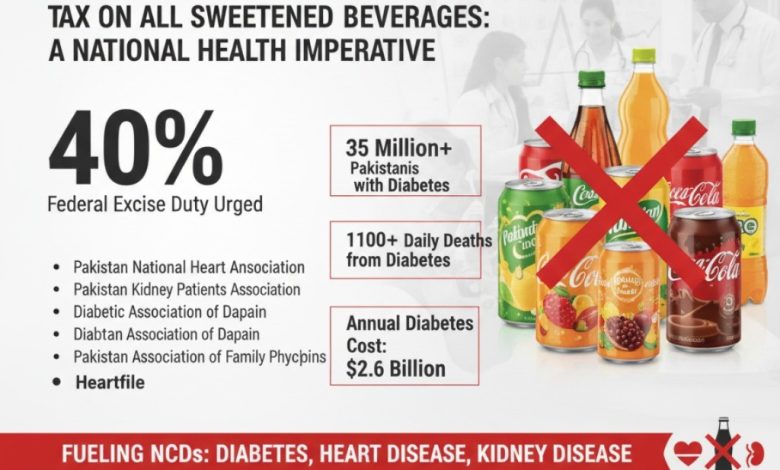
Leading medical and patient associations in Pakistan have asked the federal government to raise the federal excise duty to a minimum of 40 percent on all sweetened beverages in the 2026-27 budget, calling the move essential to curb a worsening public health crisis. The appeal was sent to the Prime Minister, Finance Minister, Health Minister, the Minister for National Food Security and Research, and key parliamentary health committees by organisations including the Pakistan National Heart Association, Centre for Peace and Development Initiatives, Pakistan Youth Change Advocates, Heartfile, Pakistan Kidney Patients Association, Pakistan Association of Family Physicians, Diabetic Association of Pakistan and PANAH.
The letters warn that Pakistan faces one of the world’s most severe diabetes epidemics. Citing the International Diabetes Federation, the groups note nearly 35 million Pakistanis are living with diabetes, with millions more undiagnosed or at high risk, and that more than 1,100 people die every day from diabetes and related complications. They say the annual cost of managing diabetes has risen to 2.6 billion, placing a heavy burden on families, the health system and the national economy.
Sana Ullah Ghumman, General Secretary of PANAH, highlighted that the World Health Organization recommends fiscal measures such as taxation on all sweetened beverages as an effective tool to prevent obesity, diabetes, stroke, cardiovascular disease and other diet-related illnesses. He emphasised that sugars in drinks, including fruit juices, contribute substantially to excessive sugar intake and heighten the risk of serious health complications.
The letters refer to substantial evidence linking consumption of sweetened beverages and packaged juices to rising rates of diabetes, stroke, heart disease, certain cancers and kidney disease. Experts express particular concern about attempts by parts of the food and beverage industry to portray juices as a healthy alternative; they note that such claims run counter to scientific evidence and WHO guidance, which recommends taxing all sweetened beverages regardless of whether sugar is added, naturally occurring, or replaced with non-sugar sweeteners.
“Providing any tax relief on juices or similar products risks misleading consumers and could be interpreted as government endorsement of frequent consumption,” Ghumman said, warning that concessions for the juice industry would contradict public health recommendations and could increase consumption under a false impression of health benefit.
PANAH and partner organisations urged policymakers to resist industry pressure and to ensure the proposed Federal Excise Duty covers carbonated drinks, packaged juices, sweetened tea and coffee beverages, flavored milk, chocolate drinks and similar products. They argued that a 40 percent FED on sweetened beverages would help reduce the growing burden of non-communicable diseases while generating revenue that could be invested in public health services and social protection programs.