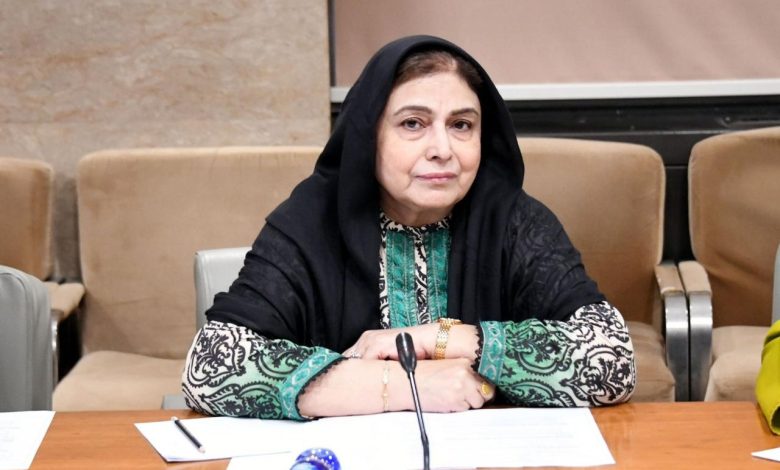
A Pakistan Peoples Party woman member of the National Assembly delivered a blistering address on the Federal Budget 2026 that turned the chamber into a scene of high emotion and sharp political debate. Speaking for Sindh, women, farmers, labourers and the young, she accused the government of setting targets while failing to show any concrete plan to ease the immediate hardships faced by ordinary citizens.
She challenged the official inflation figure of 8.2 percent as being detached from reality, urging colleagues to walk the markets where staples such as vegetables, flour, sugar, milk, ghee, pulses, medicines and infant formula are increasingly out of reach for low- and middle-income families. She warned that rising electricity bills, repeated gas price hikes and heavy petroleum levies are multiplying costs across transport, agriculture and industry, and ultimately landing on the poorest households.
Highlighting wage and social protection gaps, she criticised the budget for offering small concessions while ignoring vulnerable groups. The member called the ten percent minimum wage increase inadequate in the face of runaway prices and pointed to pensioners, daily-wage workers, small employees, small farmers and unemployed youth as largely unserved by the current measures. She said investor and business tax breaks in the package do not substitute for direct relief to those who need it most.
Turning to Pakistan’s poverty challenge, she cited recent figures showing an overall poverty rate approaching 28.9 percent, with urban areas around 17.4 percent and rural communities as high as 36.2 percent. She stressed that this disproportionate burden falls on rural populations, farm workers and marginalized households, and warned that mounting deprivation risks deeper socio-economic and political fallout if not tackled urgently.
Youth unemployment and migration received pointed attention. The lawmaker described the growing tragedy of educated young people unable to find meaningful work and said nearly eight hundred thousand Pakistanis left for overseas employment in a single year, a fact she framed as symptomatic of a lost generation and a weakening national future if opportunities are not created at home.
Her speech placed Sindh’s water crisis at the centre of the budget debate. She insisted that water is an inalienable constitutional right for Sindh, not a favour, and warned that sustained shortages are destroying agriculture, degrading the Indus delta, collapsing fisheries and creating clean drinking water emergencies. She demanded immediate correction of what she described as injustices in water distribution decisions under the Indus River System Authority.
On agriculture, she outlined the cascade of pressures confronting farmers: water scarcity, soaring fertiliser and pesticide costs, higher diesel prices and limited market access. The member argued that without visible measures to stabilise input costs, guarantee irrigation and protect farm incomes, the backbone of Pakistan’s economy will continue to weaken.
She praised the Benazir Income Support Programme as a lifeline for millions of poor women and families but urged an increase in transfer sizes so the program retains its effectiveness amid rising inflation. She also called for women-specific development funds, easier credit, skill training and business support to expand women’s economic participation, particularly in rural areas.
To address national unemployment, she asked the government to roll out targeted IT, technical education and skill development initiatives alongside business loan packages for young entrepreneurs. Emphasising human capital, she warned that failure to invest in youth will have long-term consequences for Pakistan’s competitiveness and social stability.
Bringing the debate home to her constituency in Tehsil Mahisar, District Dadu, she described prolonged load-shedding, erratic gas supply and low pressure that have made daily life unbearable for students, farmers, women and small business owners. She urged the federal government to ensure uninterrupted electricity and gas supply to the affected areas as an immediate priority.
Her remarks repeatedly drew applause from party colleagues and occasional nods of agreement across the aisle, and she closed with emphatic calls for a Pakistan that delivers justice to the poor, jobs for youth, prosperity for farmers and empowerment for women — invoking the legacy of Zulfikar Ali Bhutto and Benazir Bhutto. Her final chants echoed through the chamber and underscored the intensity with which the Federal Budget will be contested in public and parliamentary debate in the days ahead.