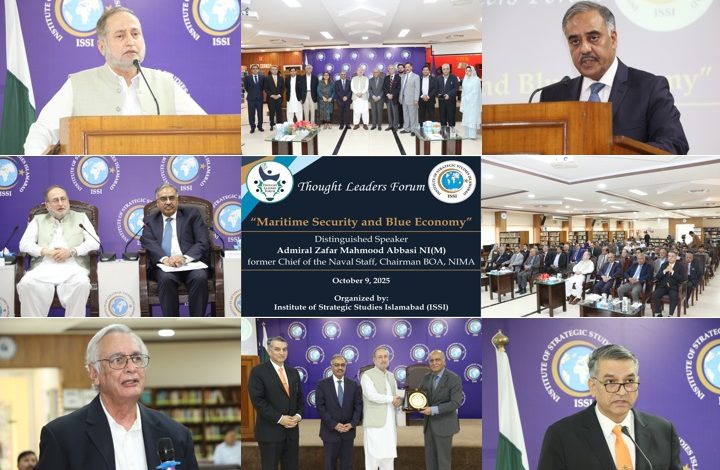
The Institute of Strategic Studies Islamabad hosted Admiral (R) Zafar Mahmood Abbasi for a focused session on maritime security and the blue economy as part of its Thought Leaders Forum. Director General ISSI Ambassador Sohail Mahmood said the discussion was intended to highlight the role of naval power, building on earlier TLF meetings held in the backdrop of the May 2025 conflict between India and Pakistan, and to encourage an informed debate on unlocking Pakistan’s maritime potential.
Ambassador Sohail Mahmood stressed Pakistan’s geo-economic and geo-strategic relevance and identified three core challenges shaping the maritime environment: strategic competition in the Indian Ocean Region, notably India’s rapid naval modernization; non-traditional threats such as piracy, terrorism, human and drug trafficking and climate change; and intensifying geopolitical rivalries as major powers seek influence at sea. He underlined the need for enhanced preparedness, regional cooperation and a shift from a primarily continental mindset toward stronger focus on maritime security.
On the economic front, the DG ISSI outlined structural barriers to a viable blue economy including an inadequate regulatory framework, fragile institutions, limited maritime infrastructure, security concerns, technological shortfalls, insufficient human expertise and economic uncertainties. He called for close collaboration among government, the Pakistan Navy, industry, academia and civil society to strengthen governance, modernize ports and coastal facilities, and create conditions for sustainable investment.
Admiral (R) Abbasi described Pakistan’s maritime domain as strategically important yet long neglected. He argued that maritime security is central to both national defence and economic growth, and that the principal military threat originates from India, necessitating credible seaward defences and deterrence. He also noted the strategic gap posed by the absence of a Pakistan Navy base at Gwadar and urged policies that reinforce coastal and seaward resilience.
The Admiral highlighted the Pakistan Navy’s peacetime contributions through participation in Combined Maritime Forces operations, Regional Maritime Security Patrols, and coordination under NAVAREA IX and search and rescue frameworks. He recalled improvements since the establishment of Coastal Command in 2005 and deployment of Pak Marines in 2018, and pointed to Pakistani involvement in multinational task forces CTF-150 and CTF-151 against terrorism, piracy and drug trafficking. Pakistan’s expanded Exclusive Economic Zone and Extended Continental Shelf confirmed in 2015 were noted as containing untapped oil, gas and mineral potential, while a revitalised shipbuilding sector and stronger indigenous shipping could conserve foreign exchange. The fishing sector’s potential remains constrained by overfishing, pollution and weak regulation, and Admiral Abbasi urged strengthened governance and infrastructure to boost exports and empower coastal communities.
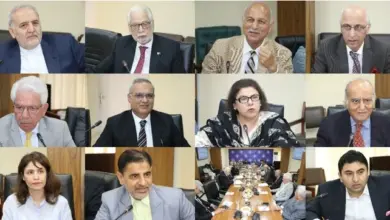
Dr. Talat Shabbir, Director of the China-Pakistan Study Centre, described the timing of the discussion as particularly relevant given the growing economic and environmental role of oceans. A lively question and answer session followed, with scholars, diplomats and policy experts probing evolving dynamics of maritime security and the opportunities of the blue economy. Ambassador Khalid Mahmood presented a memento to Admiral Abbasi at the close of the session.