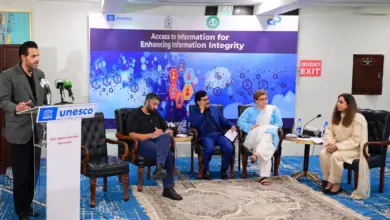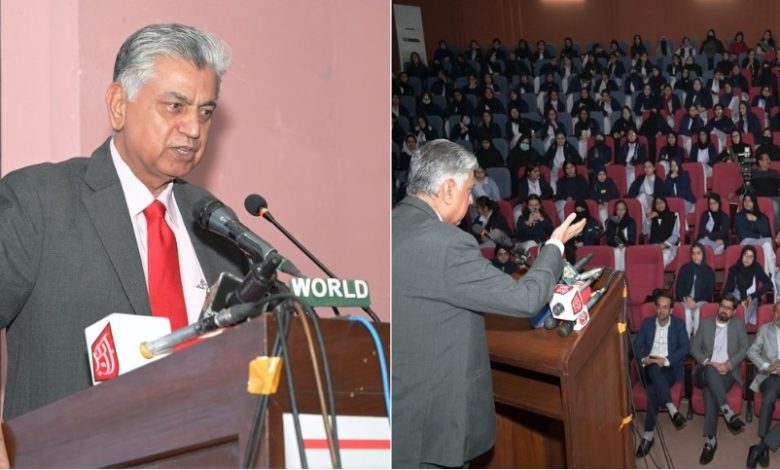
The Society for the Protection of the Rights of the Child (SPARC) convened a discussion on the WHO Global Tobacco Epidemic Report 2025 and best practices for TAPS regulations and graphic health warnings, with a clear focus on strengthening tobacco control across Pakistan. Addressing participants as chief guest, Murtaza Solangi, Spokesperson to the President of Pakistan, said the WHO findings are a stark reminder that reducing all avenues of tobacco advertising, promotion and sponsorship and expanding graphic health warnings remain vital steps to prevent avoidable harm.
Murtaza Solangi pointed to the serious global toll of tobacco — more than 8 million deaths annually — and stressed Pakistan’s own burden, where 27 million people use tobacco and more than 166,000 deaths occur each year. He highlighted the social and economic costs and called for awareness building, education initiatives and stronger implementation of international best practices to support tobacco control and protect families and communities.
Dr. Mahesh Kumar Malani, Chairman of the National Assembly Standing Committee on NHSR&C, said the statistics underline the urgency of protecting young people from promotional tactics. He warned that appealing packaging, event linkages and digital visibility can shape youth behaviour and urged policymakers to adopt comprehensive TAPS restrictions that other countries have used to reduce tobacco uptake among youth.
Dr. Shazia Sobia Aslam Soomro, Member of the same committee, acknowledged Pakistan’s progress but urged consistent, clear regulations to close loopholes in TAPS enforcement. She emphasised that large, image-based graphic health warnings that are updated regularly can prompt smokers to reconsider their habits and deter youth from starting tobacco use.
Barrister Dr. Muhammad Ali Saif highlighted persistent challenges at points of sale and online, noting that marketing practices in these spaces continue to undermine tobacco control efforts. Referring to WHO findings, he pointed out that countries with robust enforcement of TAPS restrictions have seen measurable declines in tobacco consumption, particularly among younger populations.
Dr. Khalil Ahmad Dogar, Program Manager at SPARC, said promotional activities still influence consumer decisions despite existing rules and reiterated that complete bans on all forms of TAPS are linked with significant drops in tobacco use. The session drew policymakers, journalists, civil society representatives, academics, media professionals and youth groups to evaluate Pakistan’s progress on graphic health warnings and TAPS enforcement.
Participants agreed that coordinated action, improved enforcement and public education are essential to advance tobacco control in Pakistan. Strengthening TAPS regulations, expanding the visibility and impact of graphic health warnings, and targeting youth-focused marketing channels were highlighted as immediate priorities to reduce tobacco-related harm and protect future generations.