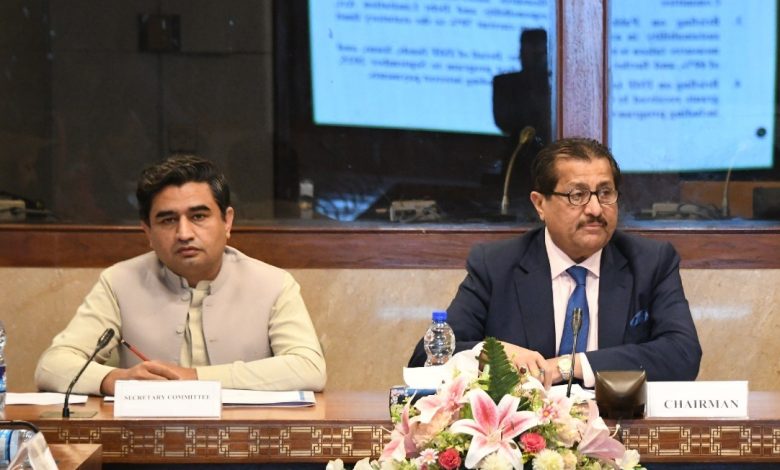
The National Assembly Standing Committee on Economic Affairs has directed that the long-delayed Lyari Freight Corridor must be immediately included in the Public Sector Development Programme, stressing that PSDP funding offers more reliable support than the PPP route. Members warned against any further obstruction to the project, underlining that the Lyari Freight Corridor is a national priority that will improve freight movement, reduce Karachi congestion and bolster the country’s logistics backbone.
The Committee asked the Ministry of Communications and the Karachi Port Trust to jointly explore all viable options to advance the corridor and proposed holding the next session in Karachi to conduct an on-ground inspection of the route. Lawmakers called for direct engagement with local stakeholders to identify practical, sustainable implementation strategies and ensure timely progress on the Lyari Freight Corridor.
In a closed briefing, the Ministry of Finance updated the Committee on the ongoing IMF assistance programme, prompting members to raise serious concerns about the current definition of public debt. The Committee urged that all forms of government borrowing be included in the official debt profile and requested greater clarity on how the primary surplus is applied to debt retirement so that the public can see how much debt is actually repaid versus new borrowing added.
Committee members also voiced alarm over mounting taxation on industry, with effective rates reportedly approaching 60 percent in some cases. They warned that such heavy taxation is crippling industrial competitiveness, deterring investment and forcing some firms to scale back operations or relocate abroad, which in turn undermines employment and deprives the state of future revenue.
The Economic Affairs Division presented its foreign training programmes for government officials, highlighting technical and leadership courses in governance, public finance and energy with partners from Japan, China, the United States, Türkiye and agencies including JICA, the World Bank and UNDP. EAD emphasised that selection is based on merit, professional relevance, educational qualifications and gender balance, with final approvals issued by the Foreign Training Committee.
The Committee reviewed regional selection figures and noted disparities: 19 candidates chosen from Sindh out of 139 applications, 58 from Khyber Pakhtunkhwa out of 178, 64 from Balochistan out of 300, 33 from Azad Jammu & Kashmir out of 86, and 52 from Punjab out of 198. Concerned by Sindh’s comparatively low share, members directed EAD to provide a detailed explanation and to prepare a guidance note to improve future nominations from the province.
Across its directives, the Committee reiterated the need for balanced provincial representation in capacity building and recommended steps to ensure inclusive development. Lawmakers concluded that moving the Lyari Freight Corridor forward through PSDP funding, addressing tax pressures on industry and improving transparency around debt and training allocations are essential to sustain economic growth and national cohesion.