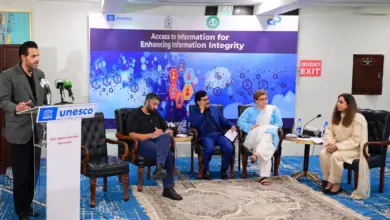
During the 16 Days of Activism, IOM, UNHCR Pakistan and UNFPA Pakistan convened a one-day workshop in Pakistan focused on TFGBV and aligned with the theme “UNiTE to End GBV against All Women and Girls.” The session brought together government representatives, service providers and civil society to deepen understanding of how technology shapes risks and protections for women and girls.
Participants explored how digital platforms and tools can expose women and girls to harassment, surveillance, image-based abuse and other harms, while also discussing how the same technologies can be harnessed to prevent violence, improve reporting and expand access to support. Practical examples and scenario-based discussions highlighted the dual nature of technology in GBV response and prevention.
The workshop placed particular emphasis on the impact of TFGBV on mental health, underlining the long-term psychological toll that online abuse can take. Experts and frontline responders discussed the everyday challenges survivors face when seeking help and the need for integrated mental health and psychosocial support within GBV services.
Disability inclusion was a central thread of the conversations, with participants stressing that survivors with disabilities require tailored accessibility measures across both digital and in-person services. The discussion called for designing platforms, hotlines and referral pathways that account for different communication needs and barriers to access.
Representatives from the Ministry of Planning, Development and Special Initiatives and the National Commission on the Status of Women reaffirmed the government’s commitment to take concrete steps to address GBV and TFGBV, pledging to work with international partners to make online and offline spaces safer and more inclusive for all women and girls in Pakistan.
Attendees left the workshop with a clearer sense of next steps for strengthening partnerships, improving survivor-centred services and promoting digital safety education. Continued collaboration across agencies and communities was underscored as essential to translate discussion into action and to advance protections that help every woman and girl live free from violence.