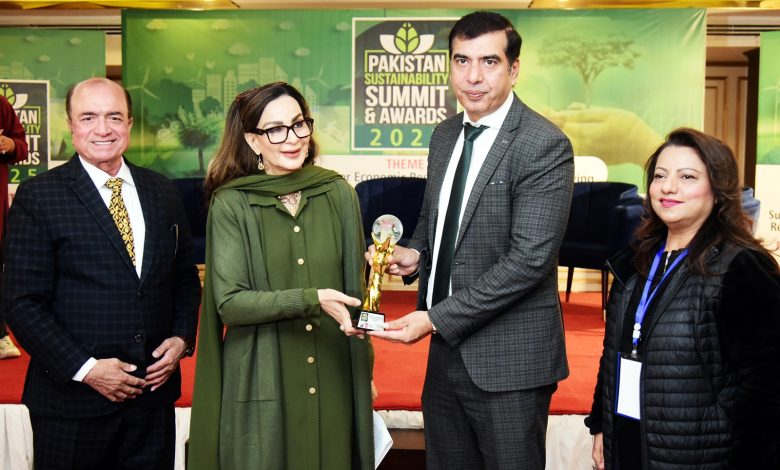
At the 2nd Pakistan Sustainability Summit and Awards in Islamabad, Senator Sherry Rehman warned that traditional construction and unchecked urban expansion are driving pollution and rising carbon emissions, and urged an immediate move toward sustainable housing. The summit, organised by Development Communications Network (DevCom-Pakistan), focused on sustainable housing, economic resilience and climate-smart lifestyles.
Senator Sherry Rehman noted that Pakistan already has green building codes but enforcement remains weak. Citing the 2025 Climate Risk Index, she said Pakistan ranks among the most climate-vulnerable countries. She highlighted that the industrial sector is responsible for 38 percent of energy-related carbon emissions and that the cement industry alone contributes 49 percent of those emissions, making decarbonising construction essential for any sustainable housing strategy.
Rapid urbanisation is a central challenge: 39 percent of the population lives in urban areas and that figure rises to 88 percent when peri-urban populations are included. Senator Rehman warned that this pattern of growth demands far better planning and resilient infrastructure to prevent repeated disasters.
Reflecting on the devastating 2022 and 2025 floods, she said poorly sited and weakly built structures were quickly destroyed and questioned why such constructions were allowed in the first place. She criticised the private sector for not treating risk seriously and pressed authorities to ensure robust, resilient and safe infrastructure nationwide.
DevCom-Pakistan Executive Director Syed Munir Ahmad said Pakistan faces an annual housing shortfall of 400,000 units while 40 percent of the urban population lives in informal settlements that lack basic services. He warned that construction and real estate are major consumers of natural resources and energy, underlining the importance of aligning the sector with sustainable housing goals through policy, private sector engagement and technical collaboration.
President of the Islamabad Chamber of Commerce and Industry Sardar Tahir Mehmood urged three priority actions for sustainable housing: transparent and effective public-private partnerships, modern regulatory and urban planning aligned with climate requirements, and climate-responsive development models following UN-Habitat recommendations. He said Islamabad could become a regional model if policy and private-sector coordination is strengthened.
Chief Executive of PIDCL Wasim Hayat Bajwa said the Ministry of Housing is implementing an integrated strategy to mainstream sustainable housing. He identified climate-resilient construction, energy-efficient building standards and low-cost green housing models as government priorities and said PIDCL is embedding sustainability at every stage of policy and implementation.
UN-Habitat Deputy Programme Manager Hamid Mumtaz Khan reminded participants that since 2005 about 4.5 million homes have been affected and losses have topped $9 billion. He said Pakistan must urgently adopt climate-smart housing, improve building performance, implement the National Housing Policy 2025, use nature-based solutions and prioritise efficient water use. The summit, he added, should guide Pakistan toward a safer, more resilient and sustainable urban future.