A new PILDAT report released ahead of National Women’s Day highlights persistent obstacles to women leadership across Pakistan’s public sector despite constitutional guarantees and workplace protection laws. Titled Women in Public Service in Pakistan: Barriers and Recommendations, the study, prepared with support from Interloop Limited, examines the structural and institutional factors shaping leadership outcomes for women in politics, the civil service, law, media and civil society.
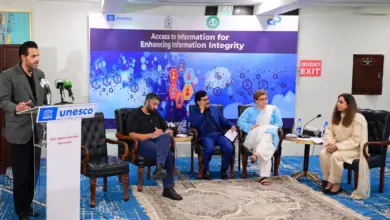
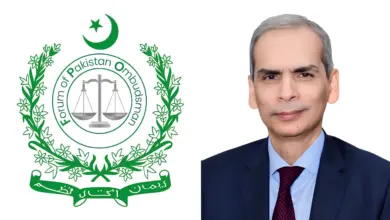
The report launch and dialogue in Lahore gathered women leaders from multiple sectors to discuss how informal power structures, weak accountability, and inconsistent enforcement of existing laws continue to limit women’s meaningful participation in decision making. Mr. Ahmed Bilal Mehboob, President of PILDAT and Provincial Ombudsman for Protection against Harassment, and Nabila Hakim Ali Khan were among those who joined the session to reflect on practical reforms.
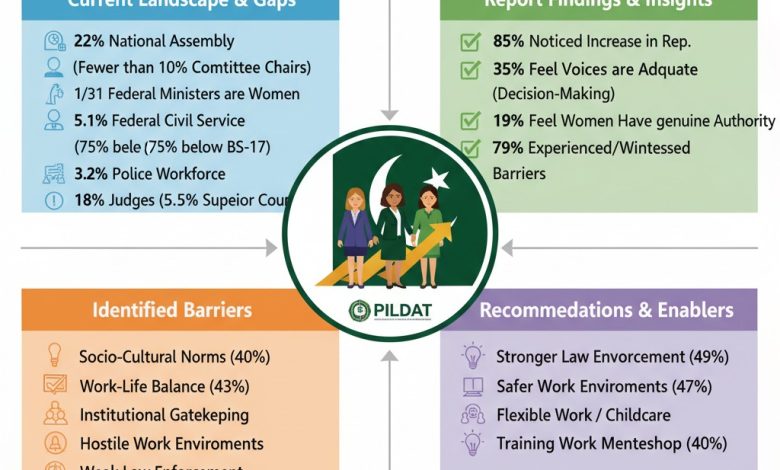
Data presented in the report show a clear gap between numbers and influence: women make up about 22% of National Assembly members but chair fewer than 10% of Standing Committees, and only 1 of 31 federal ministers is a woman. In the federal civil service women account for just 5.1% of the workforce, with over 75% of those positions below BS-17. Women represent only 3.2% of the police force nationwide, and while roughly 18% of judges and judicial officers are women overall, only 5.5% serve as judges in superior courts.
Survey findings in the report reveal mixed progress: 85% of respondents saw increased representation of women in their fields over the past decade, yet only 35% felt women’s voices are adequately present in decision-making spaces and just 19% believed women hold positions of genuine authority. Nearly four in five respondents said they had personally experienced or witnessed barriers that limited women’s advancement, indicating systemic challenges even for those who reach senior roles.
Respondents identified overlapping barriers to women leadership, with socio-cultural norms cited as a strong barrier by 40% and work-life balance pressures by 43%. Institutional gatekeeping and exclusionary informal networks, unsafe or hostile workplaces, and weak enforcement of gender equality and anti-harassment policies were also highlighted as serious constraints.
The report points to practical enablers that can strengthen women leadership, with flexible work arrangements and childcare support seen as effective by 44%, training and capacity building by 41%, and mentorship and leadership programming by 40%. When asked about urgent priorities, 49% called for stronger enforcement of existing laws and policies and 47% stressed the need for safer, more inclusive work environments.
PILDAT urges cross-sector reforms to translate formal gains into real authority for women, recommending focused enforcement, workplace reforms, and targeted leadership development so women can exercise genuine influence across Pakistan’s public institutions.