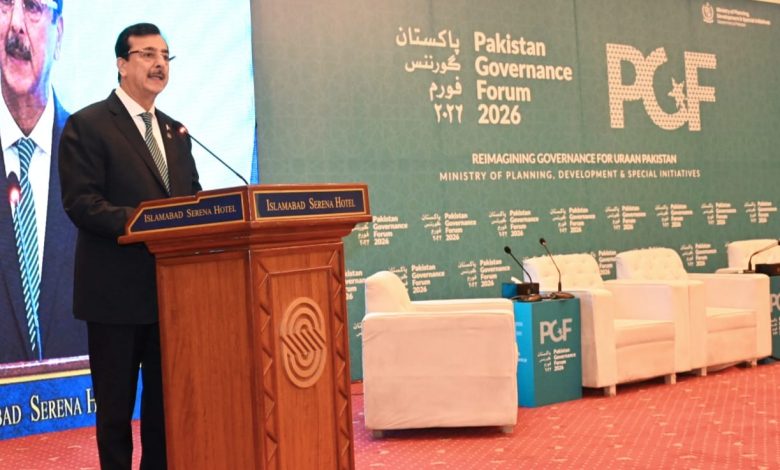
Chairman Senate Syed Yousaf Raza Gilani said Parliament is the bridge between the aspirations of 240 million citizens and the actions of government as he addressed the concluding session of the Pakistan Governance Forum 2026 as chief guest. He congratulated Federal Minister Ahsan Iqbal and the Planning Ministry team for convening a wide-ranging forum that brought policymakers, experts and stakeholders together to discuss reform priorities.
Drawing on his experience as a former prime minister and speaker of the National Assembly, Gilani stressed that effective governance depends on strong parliament oversight rather than on executive policy-making alone. He argued that sustained oversight is essential to secure transparency, accountability and public legitimacy for development decisions.
He highlighted parliamentary instruments such as Cut Motions, Calling Attention Notices, Question Hour, debates and resolutions as practical tools that refine governance and reinforce accountability. According to Gilani, every substantive debate and pointed question strengthens democratic responsiveness and institutional duty.
Mr. Gilani underscored the central role of parliamentary committees, noting that most substantive scrutiny takes place in committee rooms where policies are examined in depth, budgets are vetted and ministers are held to account. He referred to the Senate’s annual review of Public Sector Development Programme allocations from December to March and emphasised how biannual budget reviews by committees foster fiscal discipline and transparency.
Outlining priorities to deepen parliament oversight, the chairman identified three main pillars: investing in capacity-building for senators and parliamentary staff to analyse complex policy and budget documents; embracing modern technology, particularly artificial intelligence, to strengthen legislative drafting, enable real-time comparative policy analysis and boost citizen engagement; and institutionalising mechanisms that ensure executive departments systematically respond to committee recommendations.
He said the Senate of Pakistan is taking a regional lead in developing AI-based applications designed to speed up drafting, provide comparative policy insights and improve public access to parliamentary work. Mr. Gilani urged the Planning Commission and all ministries to adopt formal response channels so that gaps identified in committee reviews and PSDP scrutiny are addressed promptly and public resources are used effectively.
Concluding his remarks, the chairman reaffirmed that good governance is a collective national responsibility and that a capable, responsive parliament remains the primary guarantor of inclusive development, prudent public spending and democratic stability.