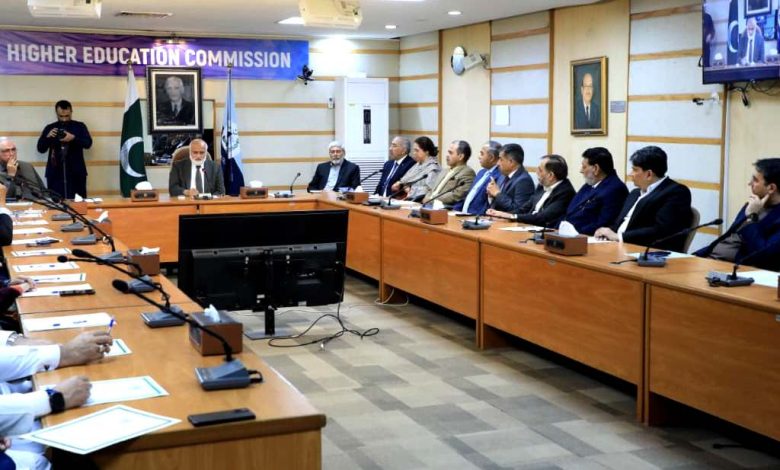
On March 2, 2026 in Islamabad the Higher Education Commission (HEC) announced the formation of multiple committees, led by university heads, to prepare a Five Year Reform Roadmap aimed at transforming Pakistan’s higher education landscape. The move, agreed at a Vice Chancellors meeting attended by about 40 university leaders from Islamabad, Rawalpindi and adjoining areas, was chaired by Prof. Dr. Niaz Ahmad Akhtar.
The committees will deliberate on short, medium and long term measures and submit detailed recommendations to HEC. Core priorities include a comprehensive skills-based curriculum review, strengthening institutional autonomy, and promoting the Triple Helix model to deepen government-academia-industry collaboration. These steps are central to the wider agenda of Higher Education Reform and improving graduate outcomes across the country.
A key outcome under consideration is the establishment of new accreditation councils for emerging disciplines, notably Mental Health and Psychology, alongside dedicated bodies for Artificial Intelligence, Maritime Sciences and Renewable Energy. The committees will also focus on faculty development and a strategic revision of Tenure Track System salaries to retain top-tier academics and reduce brain drain.
Vice Chancellors urged actions to raise programme quality, expand research funding and boost research output through confidence-building measures for government-academia-industry linkages and the internationalisation of universities. Proposals include a central repository for students to explore career pathways, simplified audit and procurement processes, dual degree programmes and a standardized assessment mechanism aligned with international standards.
Addressing the meeting, Chairman HEC Prof. Dr. Niaz Ahmad Akhtar emphasized that Pakistan’s future is inseparably linked with the development of its higher education sector. He noted that universities have performed commendably given low per-student public spending and reminded vice chancellors of their demanding role as hubs of knowledge creation, youth development and nation building.
The Chairman stressed practical measures to increase student enrolment ratios and improve the quality and employability of graduates, urging universities to implement systems to secure graduate data and to equip students with the latest technological tools. These proposed reforms are intended to deliver measurable progress under the Five Year Reform Roadmap and to accelerate Higher Education Reform across Pakistan.