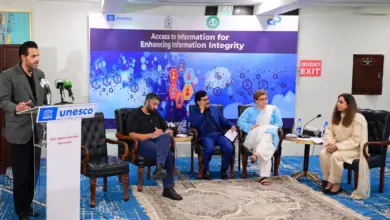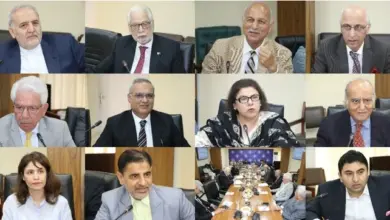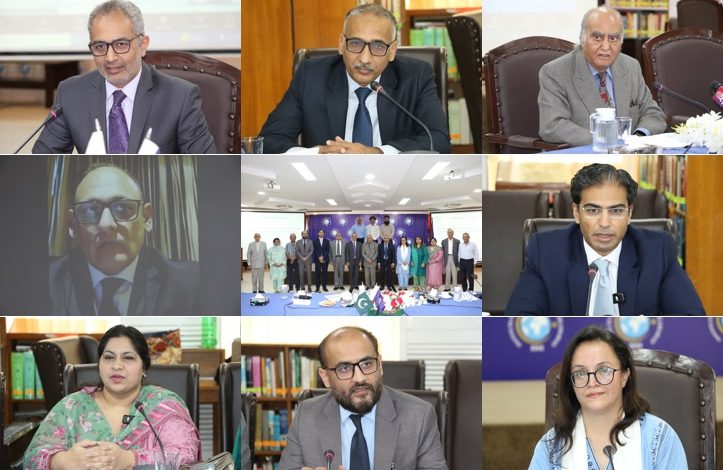
The Institute of Strategic Studies Islamabad (ISSI), in partnership with the Policy Research Institute of Market Economy (PRIME), convened a focused roundtable on April 28, 2026 to examine the economic fallout and opportunities arising from the Middle East crisis. Senior policymakers, economists and sector specialists discussed how Pakistan can navigate heightened risks while seeking strategic gains through timely reforms and economic diplomacy.
Dr. Neelum Nigar, Director of the Centre for Strategic Perspectives at ISSI, warned that Pakistan faces both intensified vulnerabilities and new openings, and argued that the country must strengthen institutional capacity to adapt to an increasingly complex global economic environment. Her remarks framed the discussion around resilience and proactive policy design.
Ambassador Khalid Mahmood highlighted immediate implications for energy security, trade flows and remittances, noting that disruptions in the region could affect Pakistan’s macroeconomic stability. In stage-setting remarks, Dr. Ali Salman, CEO of PRIME, emphasised the growing interplay between geopolitics and economics and urged policymakers to pursue a geoeconomic strategy that seeks a peace dividend through diplomatic and commercial engagement. He flagged evolving transit arrangements and shifting regional ties as signals of Pakistan’s changing strategic position.
Panel contributors assessed concrete risks and opportunities. Dr. Hassan Dawood Butt suggested Pakistan is being seen as a potential regional intermediary but cautioned that meaningful institutional reform is required to capitalise on this role. Dr. Nasir Iqbal outlined macroeconomic pressures including rising oil prices, inflationary strain, declining remittances and export disruptions while pointing to reconstruction demand in Gulf markets as a prospective export avenue. Dr. Khaled Waleed underlined structural weaknesses in the energy sector and called for modernising the grid, scaling renewables and improving storage, and Dr. Uzma Zia pressed for a strategic shift away from remittance dependence toward trade, logistics and regional connectivity, with upgraded ports and integrated corridors. Dr. Vaqar Ahmed focused on governance gaps, urging better coordination, data sharing, strategic buffers and a more assertive economic diplomacy.
Experts collectively urged a governance and policy reset to convert external shocks into structured economic opportunities. Re-engagement with multilateral frameworks such as the IMF was recommended to secure balanced programmes aligned to long-term structural reform and growth. Participants warned that Pakistan’s external account remains under pressure as remittances from the Gulf could become volatile amid the Middle East crisis, even as shifting transit patterns and reconstruction demand create openings for the private sector.
Infrastructure readiness emerged as a central theme, with repeated calls for strategic investment in port capacity—particularly Karachi and Gwadar—to capture transshipment and logistics opportunities as regional trade routes are reconfigured. Speakers also highlighted the importance of strengthening China–Pakistan cooperation in targeted sectors, building strategic reserves and improving institutional coordination so that the country can respond quickly to emergent economic opportunities.
The roundtable closed with a consensus that while the Middle East crisis poses serious risks for Pakistan’s economy, it also presents a narrow policy window for structural reform, governance strengthening and strategic repositioning. Delegates urged timely, coordinated action to translate these recommendations into implementable policy steps that protect stability while opening pathways for growth.