The 2030 Deadline: Why Pakistan Must Reinvent Its Education System Today
By Dr. Amin Khan Baloch
As Pakistan approaches 2030, traditional views on work and education are rapidly becoming outdated. The world is increasingly digital and interconnected, and our workforce must prepare for these profound shifts. While education has always driven our national progress, it now requires a bold reinvention. We must equip our students with the practical, critical skills necessary to thrive in this new era.
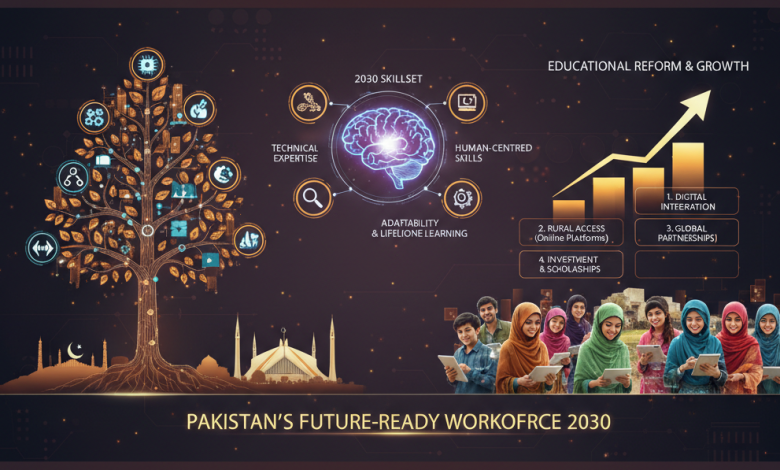
We undoubtedly face significant hurdles, ranging from wide economic disparities to outdated academic systems. However, the essential skills required for tomorrow’s job market are crystal clear. If Pakistan’s youth are to remain competitive, they must develop a powerful mix of technical expertise, human-centered skills, and the agility to adapt to change.
As global industries accelerate their digital transformation, technical capabilities are no longer optional; they are absolute necessities. Pakistan must commit to providing students with rigorous technological education, focusing on disciplines like artificial intelligence, automation, and data science. From learning foundational coding to understanding the ethical application of technology, these skills form the backbone of future ready careers.
This requirement extends far beyond software engineers. In fields ranging from medicine to civil engineering, professionals who are fluent in technology will hold a massive advantage over their peers. Therefore, our schools and universities must integrate digital literacy into the core curriculum to prepare students for continuous, fast paced innovation.
While machines increasingly handle repetitive tasks, the value of uniquely human skills is rising faster than ever. Creativity, leadership, teamwork, and emotional intelligence will serve as the essential cornerstones of the 2030 workforce. Educational institutions must cultivate these human traits alongside technical learning.
This balanced approach will enable our students to excel in roles demanding critical thinking and collaboration functions that artificial intelligence simply cannot replicate. Even the brightest tech professionals must know how to work within diverse teams, understand the societal impact of their work, and lead with genuine empathy. In an interconnected global economy, these human capabilities will truly elevate Pakistan’s talent.
The future remains notoriously uncertain and constantly shifting. To truly succeed, students must become highly adaptable, lifelong learners who can embrace change and recover quickly from setbacks. Whether facing economic downturns, climate crises, or disruptive technologies, resilience will be their most vital asset. Educators must pivot toward teaching strategies that prioritize flexibility and problem solving to prepare youth for dynamic, ever evolving career paths.
By the end of this decade, global education will be heavily shaped by multinational corporate influence and peer-to-peer digital learning models. Global corporations are already shaping curricula to ensure graduates meet modern industry needs, while regional hubs customize education for local priorities. Pakistan must find a balanced approach that blends this global alignment with local responsiveness.
Building strong international partnerships while aggressively addressing domestic challenges, such as poor rural access to education, is absolutely critical. Embracing scalable digital learning platforms can effectively bridge the urban rural divide and offer equitable opportunities for skill building. To meet the workforce demands of 2030, Pakistan must urgently reform its education sector through increased investment in primary and secondary schooling.
Initiatives like targeted scholarships for low-income families, vocational training, and online education programs must be expanded to ensure no child is left behind. Furthermore, the system must instill a growth mindset in learners, preparing them for continuous adaptation rather than just one-time academic success. Pakistan must act now to equip its youth with the skills to lead and innovate, guaranteeing our workforce is ready for 2030.
Dr. Amin Khan Baloch is an Assistant Professor at the National Skills University Islamabad. He holds a PhD from University Utara Malaysia and has extensive experience in academic research and teaching in management sciences and e-commerce.